Keep Your Los Angeles ADU Project Legally Covered
Building an ADU in Los Angeles is not just about floor plans and finishes. Behind every smooth project is permits, utility accounts, and clear rules about who is responsible at each step. When those pieces are set up the right way, your project moves forward. When they are not, things can stall fast.
Most homeowners choose between two paths. One is hiring a turnkey ADU builder in Los Angeles, where one team handles design, permitting, construction, and more. The other is going in as an owner-builder, where you hold the permits yourself and run the project. By the end of this article, you will see who usually holds permits and utility accounts on each path, and how that ties into liability, risk, and stress. Fall is a smart time to lock in those decisions so your ADU can move through the mild winter construction season and be ready for summer renters or family use.
How Permits Work From Day One to Final Signoff
For a Los Angeles ADU, you are usually dealing with several layers of permits and approvals, such as:
- Planning and zoning approvals for ADU placement and size
- Building permit for the structure itself
- Electrical, plumbing, and mechanical permits
- Final inspection signoffs and certificate of occupancy
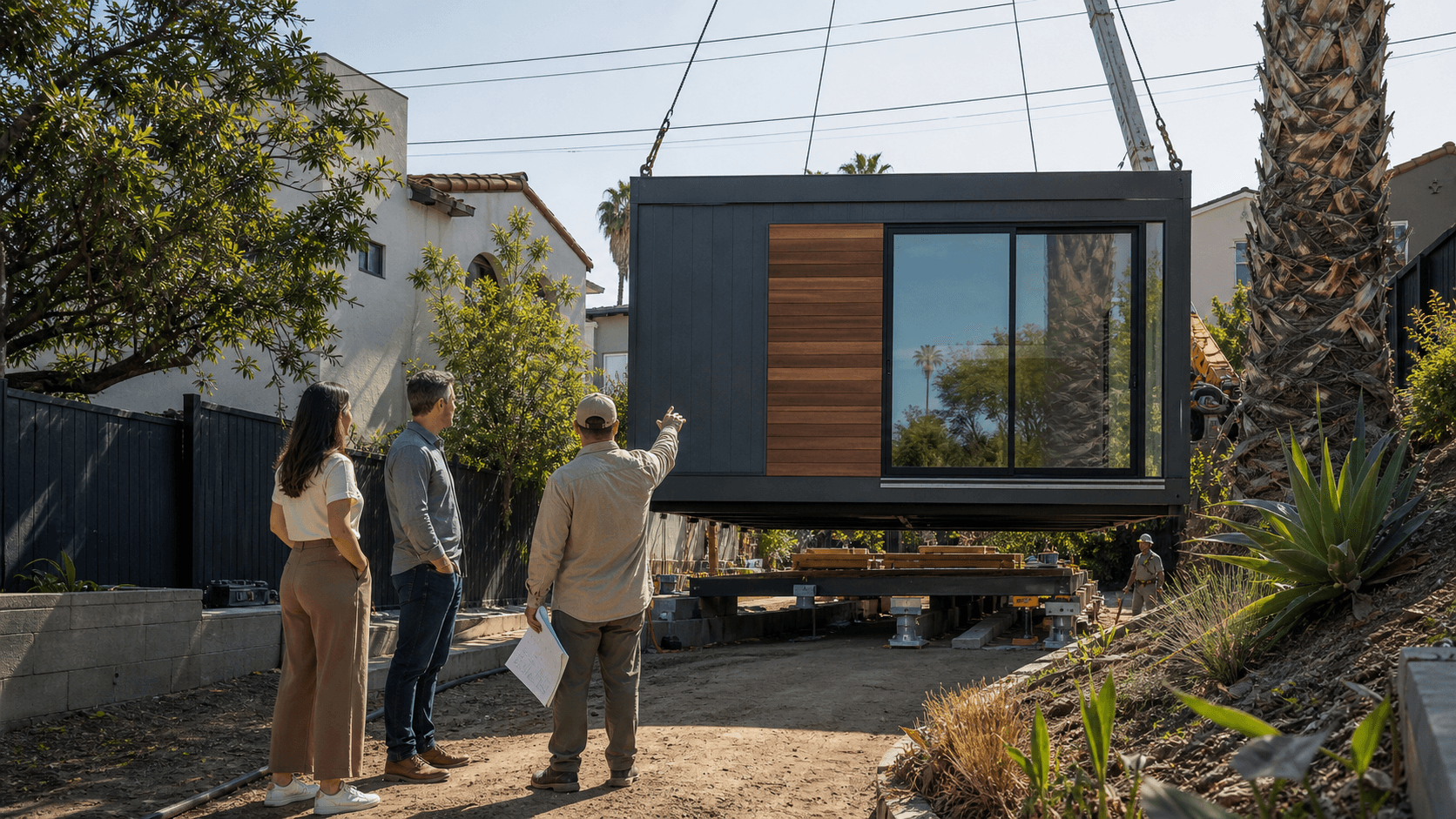
With a turnkey ADU builder in Los Angeles, the contractor is normally listed as the contractor of record. Our team works with design professionals to create drawings, file them with the city, answer plan check comments, and schedule inspections. Your name stays on record as the property owner, but the contractor is the party speaking directly with building officials about construction details.
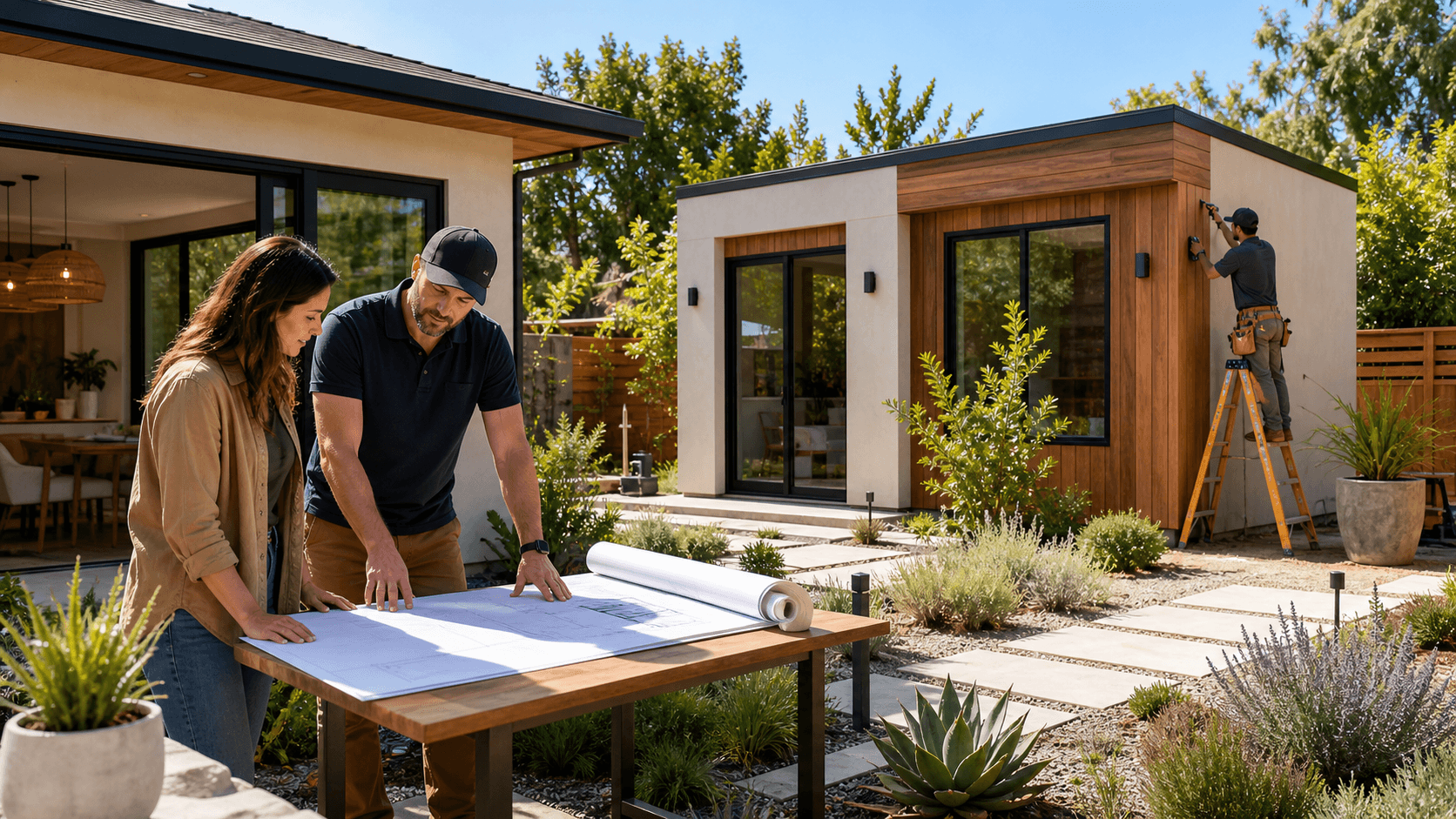
On the owner-builder path, you personally become the responsible party on the permit. You sign owner-builder declarations. You are the one who receives correction notices and are expected to understand what they mean, then coordinate updated drawings and resubmittals. When inspectors show up, they look to you for answers unless you have a contractor with you who knows the project inside and out.
The risk with owner-builder permits is that you might hire separate trades who do not follow code, or who cut corners to move faster. Since the permit is in your name, the city sees you as the one in charge. That can lead to:
- Correction notices that are hard to understand
- Stalled projects if subs stop answering your calls
- Red tags or stop-work orders if something serious is found
With a turnkey setup, the contractor is the one who must fix code issues tied to their work. This keeps the line of responsibility much clearer.
Utility Accounts, Meters, and Long-Term Responsibility
Utilities are another big piece that many people do not think about until it is late in the game. For an ADU, you may need:
- A new or upgraded electrical service and subpanel
- Adjustments to gas service for a new stove or water heater
- Water and sewer connections tied to the main house or a new line
Some owners prefer shared meters and then charge tenants a set amount each month. Others want separate meters so each unit has its own bill. Either way, someone has to work with LADWP and other local providers, plan trenching, and coordinate panel upgrades or shutdowns.
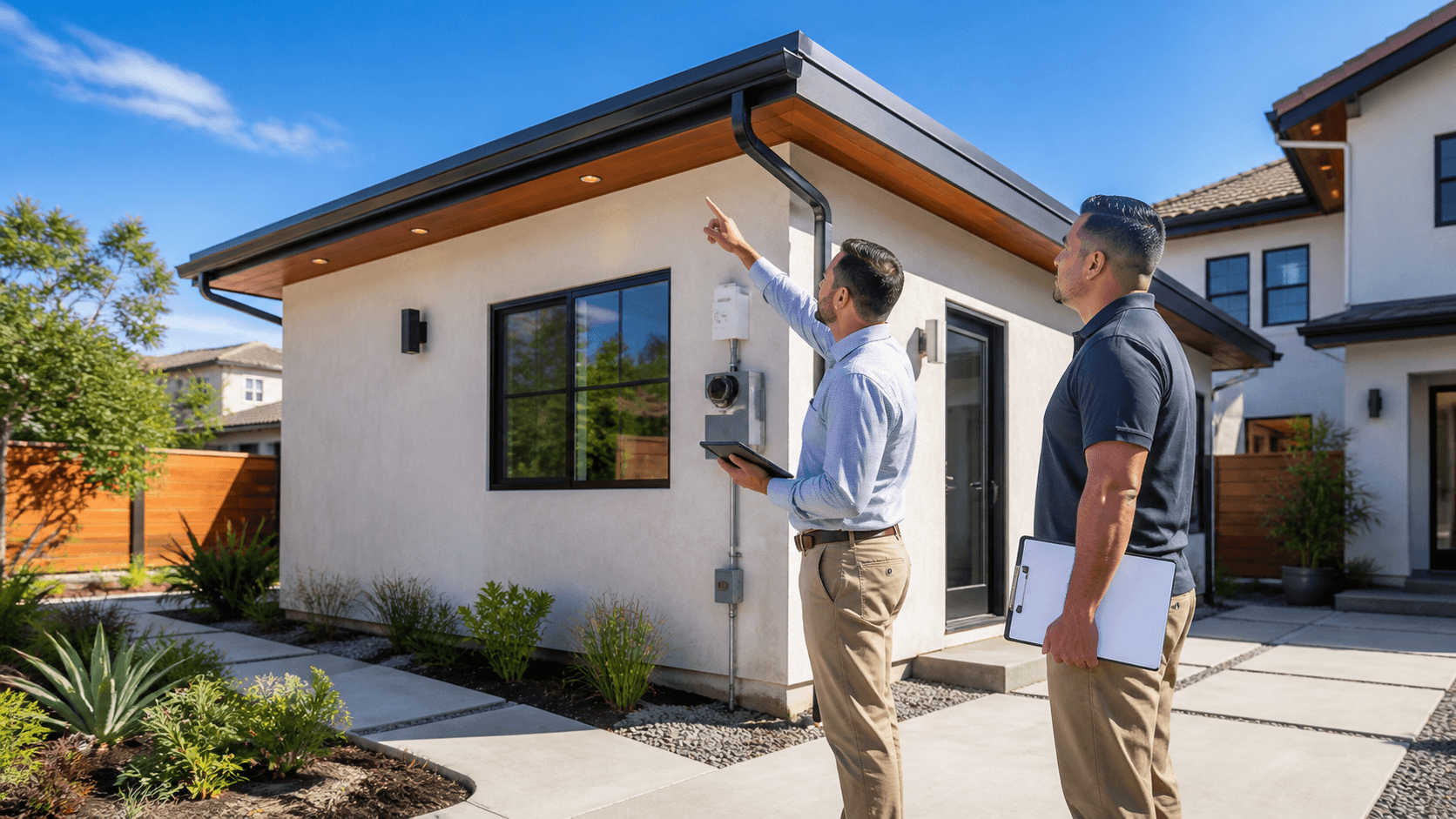
A turnkey ADU builder in Los Angeles usually handles temporary construction power, coordinates service requests, and builds the permanent system so it is safe and code compliant. Utility providers usually expect the property owner to hold the final accounts, but the builder gets everything ready so those accounts are simple to open.
As an owner-builder, you are the one who must open any construction-related accounts, schedule meter pulls or upgrades, and be present for utility inspections. If the utility provider denies or delays a service change, you are the one calling back, sending forms, or reworking plans with your trades.
Long term, liability for utility failures often comes back to how the work was done. When licensed professionals install panels, wiring, gas lines, and water lines with proper documentation, homeowners are better protected if something fails later. Poor or undocumented work can leave you dealing with frustrated tenants, surprise repair bills, and possible safety concerns.
Liability at Every Stage: Design, Build, and Move-In
Liability shifts as your ADU moves from idea to design, then to construction, then to a finished rental or guest space.
During pre-construction, design and engineering work needs to meet local code. A turnkey path usually means you are working with licensed designers and engineers who stamp their plans and stand behind them. If there is an error in the drawings, there is a clear professional responsible for fixing it.
During active construction, liability is mostly about two things: personal injury on site and defects in the work. With a licensed, insured contractor, that company is typically responsible for carrying workers' compensation for its crew and general liability for the project. That can cover many jobsite risks, like worker injuries or damage to neighboring property that is tied to construction activity.
On an owner-builder job, you may be seen as the employer of whoever is on site, especially if they are not clearly independent and insured. That can mean you need to think about:
- Workers' compensation coverage
- General liability coverage for the project
- Careful vetting of each subcontractor and their insurance
Post-completion, once tenants move in and you are collecting rent, liability shifts toward defects, leaks, or safety issues that show up over time. Final inspection means the city saw the work as code compliant at that moment, but it does not guarantee that every piece of work will last. Warranties, clear contracts, and a turnkey team that stands behind its work can transfer a lot of that risk off your shoulders.
Timeline, Cost, and Stress: Hidden Tradeoffs of Control
Control sounds great until it starts to slow everything down. A seasoned turnkey ADU builder in Los Angeles knows how to sequence design, permitting, and construction so there are fewer gaps. Established processes and relationships with inspectors and trades can keep the schedule moving.
Owner-builders often face a learning curve. Some common issues include:
- Time spent figuring out forms and plan check comments
- Gaps between trades, like waiting weeks for the next sub to show up
- Re-work if something fails inspection and needs to be torn out
Many people think they will save by avoiding contractor markup. In real life, those savings can be eaten up by change orders from miscommunication, delays that drag out rent start dates, and fines or extra fees if work drifts off the permitted path.
Fall is a busy time for many families, with school in full swing and holidays ahead. Agencies and inspectors can also have shorter hours or limited schedules at certain times of year. A full-service team can plan around this, keeping your ADU progressing even when offices are closed more often. Every extra month of delay is a month without rental income, which can quietly erase any money you hoped to save by running the project yourself.
Choose Your ADU Path with Eyes Wide Open
So which path fits you best? Owner-builder might make sense if you:
- Have a construction or project management background
- Have plenty of free time to be on site and answer calls
- Are comfortable taking on risk and learning public agency rules
On the other hand, a turnkey approach is often better if you prefer:
- Clear lines of responsibility for permits, inspections, and corrections
- One point of contact for design, permitting, and construction
- Less stress around workers, insurance, and long-term liability
At One Stop ADU Center, we bring design, permitting, financing, construction, and tenant placement together under one roof. For Los Angeles homeowners, that can mean one team that knows your property, your goals, and exactly who should hold which permits and accounts at every stage so your ADU can move from idea to income as smoothly as possible.
Get Started With Your Project Today
If you are ready to add value, space, and flexibility to your property, our team at One Stop ADU Center is here to guide you from concept to completion. As a trusted turnkey ADU builder in Los Angeles, we handle design, permits, and construction so you can move forward with confidence. Tell us about your goals and we will help you choose the right ADU solution for your lot, budget, and timeline. Have questions or want to schedule a consultation? Simply contact us to get started.