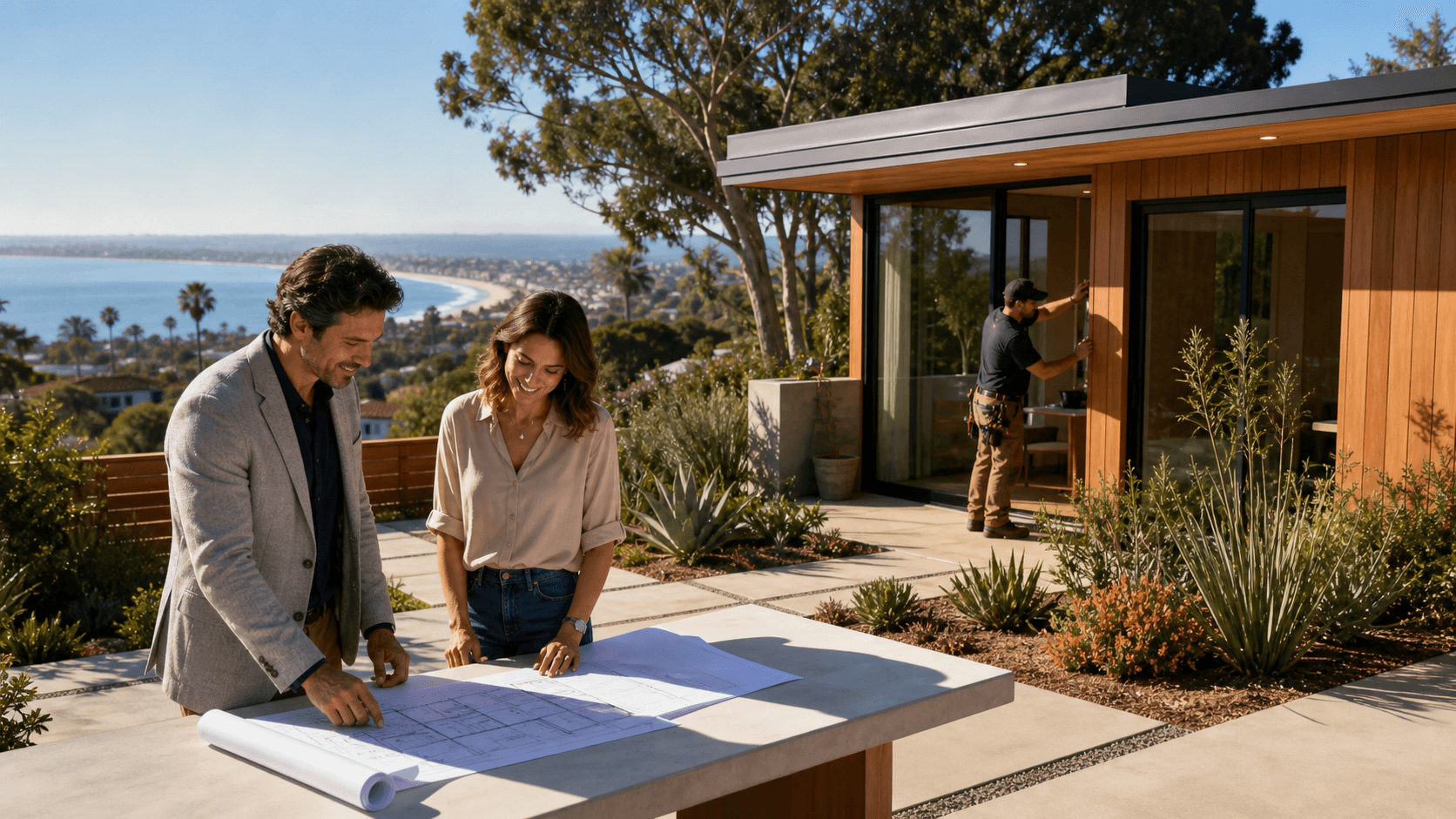
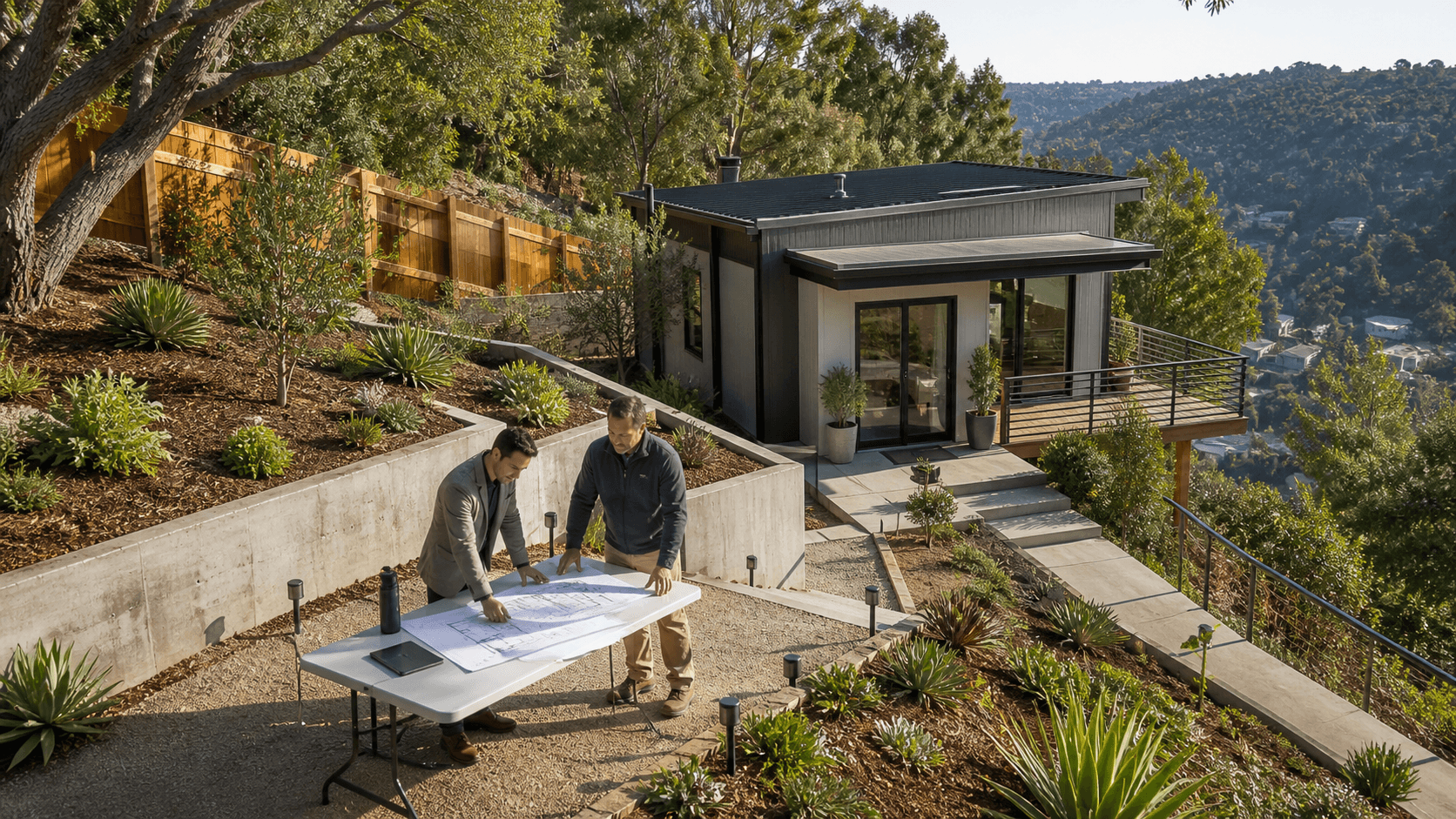
Turn a Tricky Lot Into a High-Performing ADU
Building an ADU on a tricky lot can feel hard. Slopes, tight side yards, odd corners, big trees, or an old garage in the way all make the project seem risky. The good news is that with the right licensed accessory dwelling unit builders, those "problem" yards can become strong rental units or comfortable homes for family.
As we move into early fall in California, it is a smart time to start planning. Design, engineering, and permits can move forward now, so major work lines up with the drier months. That way, foundations, grading, and utility trenching are less likely to be delayed by rain or shorter days.
Here is what we will walk through together: what makes a lot complex, why licensing matters even more on these sites, how to judge different builders, why a full-service partner can reduce stress, and how smart timing helps everything go smoother on your property.
What Makes a Lot "Complex" for ADU Construction
Some yards are simple open rectangles. Many California properties are not. A lot can be called "complex" when the site itself or the local rules make a normal ADU build harder than usual.
Common site challenges include things like:
- Steep or uneven slopes
- Existing retaining walls that may need to stay or be rebuilt
- Narrow side yards or tight rear setbacks
- Irregular lot shapes with odd corners
- Easements for utilities or shared driveways
- Older house foundations that limit where you can dig
- Limited street access for trucks and materials
- Existing garage conversions or sheds in the way
On top of that, local rules can make the design more technical. Zoning rules, setbacks, height limits, and lot coverage all have to be checked. Utility easements, fire access routes, and special hillside or coastal zones can trigger more reviews from the city. A simple "box in the back" can quickly turn into a careful puzzle.
All of this affects:
- Structural design, such as deeper footings or special framing
- Grading and drainage, so water flows away from both homes
- Utility trenching, which may be longer, deeper, or need upgrades
- Overall schedule and budget
A complex lot does not mean you should give up. It just means you need a plan and a licensed builder who knows how to work with the site instead of fighting it.
Why Licensing Matters More on Challenging ADU Sites
Any construction project should use a properly licensed contractor. On a complex ADU site, that step becomes even more important. There is more risk, more technical work, and more city checks.
In California, working with licensed accessory dwelling unit builders means you are hiring someone who holds a state contractor license and the right classifications for the type of work. They should also have workers' compensation for crews and liability coverage. This protects you if someone is hurt on site or if something goes wrong with the work.
Tricky lots often need:
- Extra structural design to handle slopes or tall walls
- Attention to soil, drainage, and retaining systems
- Multiple inspections from building, planning, and possibly fire
Experienced licensed builders know what city inspectors expect. They know how to stage work so inspections pass the first time as often as possible. This helps avoid rework, delays, or changes that can slow everything down.
There are also real red flags to watch for:
- Vague or very short contracts
- No clear permit history with local cities
- Hesitation to share license numbers or insurance details
- Suggestions to skip permits or "keep it simple" by hiding work
On a complex lot, those red flags can turn into stop-work orders, fines, unsafe structures, or even a unit you cannot rent. Taking the time to check licensing and insurance is one of the best forms of protection you have as a homeowner.
How to Evaluate Licensed Accessory Dwelling Unit Builders
Once you know you want a fully licensed team, the next step is choosing the right one for your kind of lot. Not every ADU builder has experience with hillsides, narrow yards, or irregular sites, so it helps to ask very clear questions.
Good questions to ask include:
- How many ADUs have you built on sloped or hillside lots?
- Can you show photos of ADUs on narrow or oddly shaped lots?
- What have been the biggest site problems you solved?
- How do you plan around drainage and access on tight sites?
Then verify what they tell you. You can:
- Check the contractor license status with the California State License Board
- Confirm their insurance is current and fits the size of your project
- Ask for references from homeowners who also had complex properties
When comparing different bids, try to look at the process instead of only the price. On tricky lots, the cheapest bid can be missing big pieces, such as:
- Grading and soil work
- Retaining walls or slope support
- Utility line upgrades or longer trenching
- Site access solutions, like temporary paths or stairs
Those missing items often show up later as change orders. A builder who does a careful site review up front and explains these elements clearly is usually a better fit for a complex ADU, even if the first number is higher than a quick "ballpark" estimate from someone else.
The Advantage of a Full-Service ADU Partner for Tough Lots
When a lot is challenging, every handoff between designer, engineer, contractor, and city planner is a chance for delay or confusion. That is where a full-service partner really helps, especially here in California where local rules can change from city to city.
With a full-service ADU firm, the same team handles:
- Site feasibility and early walk-throughs
- Design that fits your house, yard, and local rules
- Structural engineering that matches the real soil and slopes
- Permit submittals and city comments
- Construction and final inspections
This kind of coordination can cut down on back-and-forth and reduce the chance that the design ignores a site issue that will later cause an expensive change in the field.
Financing is another big part of making a complex lot work. When a partner offers ADU-focused funding and options where you may start with no money out of pocket, that can help turn a tricky site into a real income-producing unit instead of a "maybe someday" idea.
Full-service teams also plan with future tenants in mind. On tight sites, it is important to think about:
- Private entry paths and safe lighting
- Window placement that protects privacy for both homes
- Noise control where walls sit close together
- Logical parking and trash areas
When tenant placement services are also handled in-house, you can move from finished construction to a rented, cash-flowing ADU much faster.
Seasonal Timing Tips for Starting an ADU on a Tricky Lot
Fall is a great season in California to get serious about a complex ADU project. Kids are back in school, many cities are still working at full speed, and you can line up work to match longer, drier days later in the year.
For complex lots, use fall for:
- Site walks, photos, and basic measurements
- Surveys and any soil reports that may be needed
- Early design ideas and layout options
- Utility research so you know where lines run
Work like grading, trenching, retaining walls, and foundations is sensitive to weather and daylight, especially on slopes and drainage-heavy sites. Planning ahead lets your builder schedule these pieces when it is easier to keep the ground dry enough and crews have more daylight to work safely.
City permits for complex ADUs may take extra review cycles or sign-offs from more than one department. Starting the process in early fall helps reduce the chance that a back-and-forth with the city pushes your build into the rainiest or busiest approval periods.
With smart timing, careful builder selection, and a clear plan, that "difficult" lot in your yard can turn into one of the strongest and most flexible parts of your property.
Get Started With Your Project Today
If you are ready to add value and flexibility to your property, our team of licensed accessory dwelling unit builders can guide you from initial concept through final inspection. At One Stop ADU Center, we handle design, permits, and construction so you can move forward with confidence. Tell us about your goals and site details, and we will outline the best path for your ADU. Have questions or need a personalized quote? Contact us to schedule a consultation.