Avoid Costly Surprises in Your Los Angeles Garage Conversion
Turning a garage into living space in Los Angeles sounds smart. You can add a rental, create room for family, or finally get that quiet home office. On social media, a garage conversion in Los Angeles often looks like a simple weekend project with a little paint and some new flooring.
The truth is very different. Los Angeles has strict rules, tight inspections, and a lot of small details that trip people up. What looks cheaper as a DIY project at the start can turn into a pile of hidden costs later: delays, fines, redoing work, and months of lost rent.
We work on ADUs and garage conversions every day, and we see the same problems come up again and again. Let us walk through where those hidden costs usually show up so you can plan with clear eyes and protect your long-term return.
Permits, Plans, and Red Tape You Cannot Ignore
A legal garage conversion in Los Angeles is not just hanging drywall and adding a bathroom. Before anyone swings a hammer, you have to deal with several overlapping requirements, including:
- City and county zoning rules
- State ADU laws that control size and placement
- Parking replacement rules when you remove covered parking
- Title 24 energy standards for lighting, windows, and insulation
- Possible historic or hillside rules that add extra reviews
When people try to handle all of this alone, the hidden costs often show up in the plan-check phase. Plans are sometimes drawn without a clear understanding of local code, which leads to repeated rejections. That can trigger extra fees for resubmitting plans and corrections, and it often creates a scramble to hire an architect or engineer midstream after the city asks for stamped drawings. Those delays can push construction into busy seasons when labor and materials are harder to schedule.
Another hidden cost is enforcement. Unpermitted or off-plan work can lead to:
- Stop-work orders that shut your project down while you fix violations
- Correction notices that force you to open walls back up
- Having to demolish or redo work that is not to code
- Trouble when you try to refinance, sell, or insure the property, since lenders and insurers often want proof that the ADU or conversion is legal
What seems like saving money by skipping professional help with plans and permits often just shifts the cost into stress, fees, and lost time.
Construction Pitfalls That Blow Up Your Budget
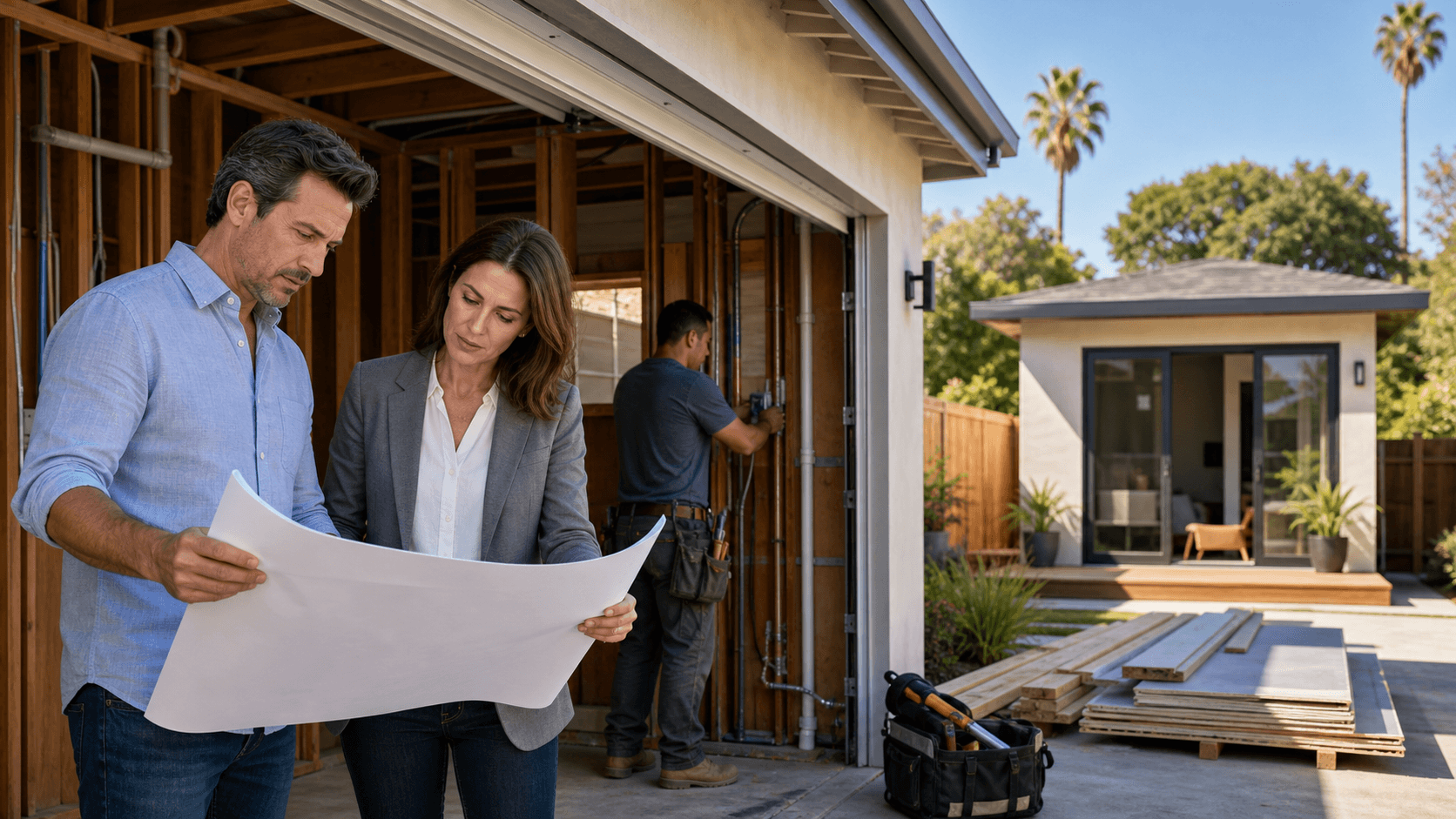
Most older garages in Los Angeles were never meant for people to live in. They were built for cars and storage, so once you start opening things up, surprise issues have a way of appearing. Common problems we see include:
- Foundations that need repair or strengthening
- Seismic work to handle earthquakes
- Termite or dry rot damage in walls and framing
- Moisture intrusion from old slabs or poor drainage
- Outdated or unsafe electrical work
Each one of these can change the scope of your project in a big way, and it is easy to underestimate how much time and money those repairs add when you are managing it on your own.
Utility upgrades are another area that catches DIY builders off guard because a real living unit usually needs more than what a garage was designed to support. In many cases, that means planning and budgeting for:
- An upgraded electric panel or a new sub-panel
- New sewer connections and venting
- Trenching for water and gas across the yard
- Title 24 compliant insulation, windows, and lighting
- Proper heating and cooling, not just a small plug-in unit
Every new trench, inspection, and upgrade adds time and coordination. Without professional project management, contractor schedules, change orders, and material price spikes can stretch what you thought was a short project into a long, stressful one. Late summer and fall are busy for construction in Los Angeles, so booking trades on your own can mean long gaps between steps while you wait for the next crew.
Lost Rental Income and Financing You Never Factored In
Many homeowners think only about the up front build cost and forget about the income side of the picture. A garage conversion in Los Angeles is not just an expense, it can also be a new source of rent, and time has a dollar value.
If you plan a quick DIY job that you think will take six months, but it drags to twelve or eighteen, that is a lot of rent you never see. In popular parts of the city, those extra months of vacancy can add up to many thousands of dollars in lost income, especially if you miss the late summer and fall period when many renters are searching.
There are also holding costs during a stretched out project:
- Higher electricity use from tools, fans, and temporary lighting
- Temporary storage if you clear out the garage
- Alternative parking costs if you relied on that garage space
- Short-term places to stay if utilities are shut off during key parts of the work
- Insurance changes while your property is under construction
On top of that, many owners do not tap into ADU-friendly financing. Without a professional ADU partner, it is easy to miss options like:
- Loans designed around ADU projects
- Equity-based products that spread out your cash needs
- Construction financing that lines up with major phases of the build
Skipping these tools can force you to slow the project down as you save cash between stages, which again delays the day your unit starts paying for itself.
Design, Code Compliance, and Long-Term Value Traps
Even when a DIY garage conversion in Los Angeles passes inspection, it may not work well as a real place to live. Small design choices can have a big effect on what you can charge for rent and how happy your tenants are. We often see issues like:
- Awkward layouts that waste space and feel cramped
- Not enough natural light, which makes the unit feel dark
- Poor soundproofing, so every footstep or TV noise carries between the main house and the ADU
- No real storage, so the space feels cluttered
- No privacy between the front door of the ADU and the main house
Code and comfort details can also get missed, such as:
- Proper egress windows and doors for safety
- Minimum ceiling heights for habitable rooms
- Accessibility considerations that make the space easier to use for more people
- Correct mechanical ventilation for kitchens and baths
- Sound ratings between units to keep noise under control
Trying to cut corners with cheaper insulation, thin windows, or undersized HVAC can lead to higher utility bills, more wear and tear, and renters who move out quickly. You might pass inspection once, but the long-term experience in the space is what protects your property value and your income stream.
Turn Your Garage Into Income the Smart Way
When you add it all up, the hidden costs of a DIY approach are not only about money spent on materials. They show up in a few predictable places:
- Permit and plan mistakes that lead to extra fees
- Surprise repairs in old garages and systems
- Timelines that stretch far past what you expected
- Months of rent you never collect
- Design and comfort problems that drag down long-term value
A thoughtful, full-service path can flip that script. With an expert team handling design, permits, financing conversations, construction, and even tenant placement, your garage conversion in Los Angeles has a much better shot at staying on schedule and meeting local rules. That means you are more likely to have a code-compliant, comfortable unit ready when rental demand picks up around late summer and fall, instead of still being stuck in plan checks or mid-construction.
Planning your project with the full picture in mind is the best way to protect both your peace of mind and your property for years to come.
Get Started With Your Project Today
Transform your unused space into a functional, income-producing ADU with One Stop ADU Center guiding every step. Explore how a customized garage conversion in Los Angeles can maximize your property's value and match your lifestyle. If you are ready to move forward or have questions about your specific lot, contact us and we will help you outline the best path for your project.