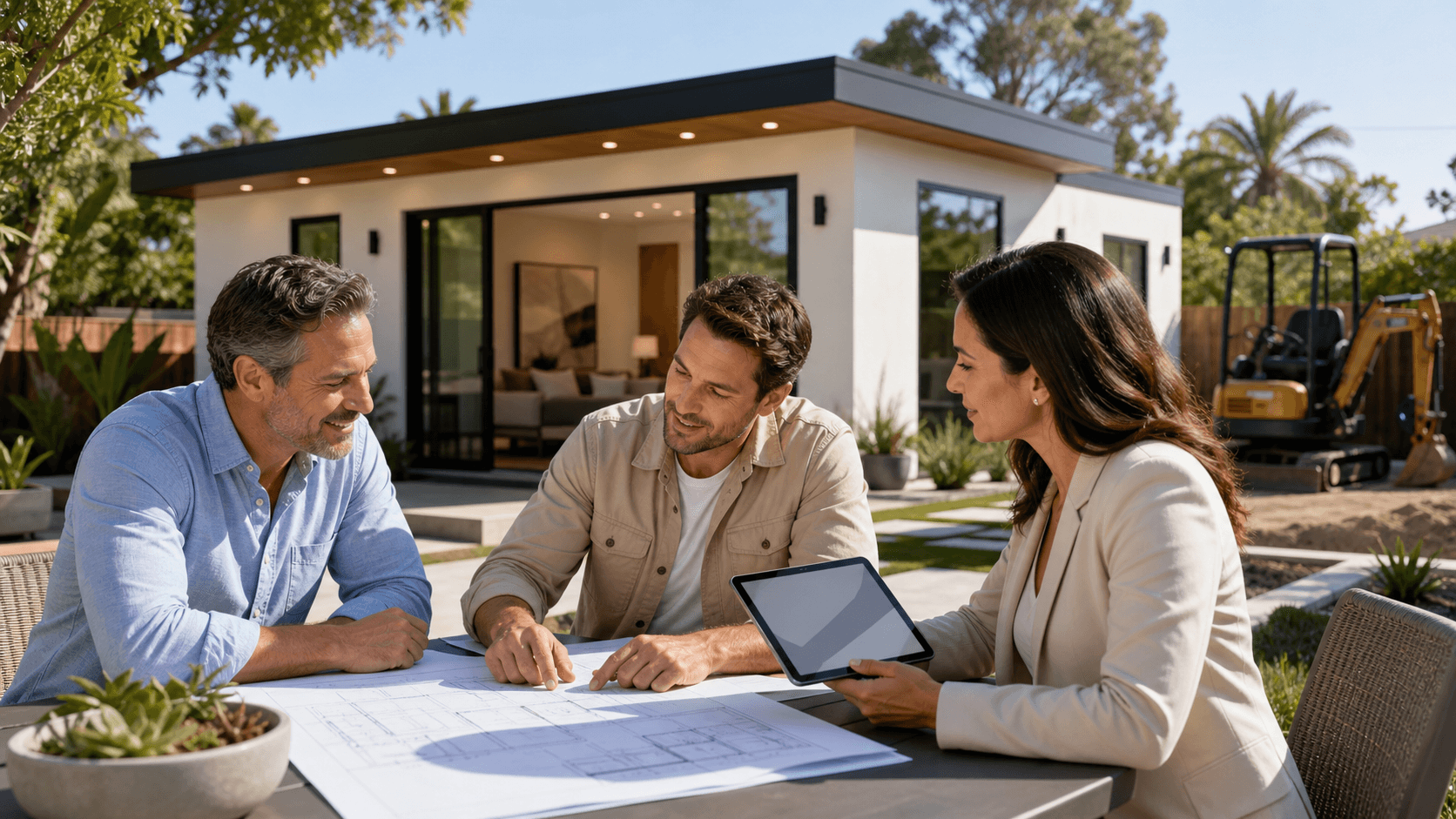
Build a High-Value ADU Without Draining Your Savings
Turning a piece of your backyard into a luxury guest house or rental does not have to swallow your savings. With the right plan, you can build a high‑end accessory dwelling unit, or ADU, while keeping your cash in the bank and setting yourself up for strong rental income.
Many California homeowners right now are thinking ahead to next summer and asking simple questions: How can I create extra space, bring in passive income, and raise my property value, all at the same time? The answer often sits right behind the main house. When you work with licensed accessory dwelling unit builders, that unused yard can become a private, modern suite that renters are excited to pay for.
Here is the key idea: when smart financing meets a licensed, design‑build team, a $0‑out‑of‑pocket ADU project becomes realistic. The monthly rent can help cover your loan, while the new structure boosts your property's long‑term value. A full‑service firm can coordinate design, permits, construction, financing partners, and even tenant placement so the process feels clear instead of overwhelming.
Why Luxury ADUs Are California's Smartest Home Upgrade
California's housing demand is not slowing down, especially in areas close to jobs, schools, and transit. Good rentals are hard to find, and many renters are happy to pay more for privacy, comfort, and a space that feels like a true home, not just a basic unit in a crowded building.
A luxury ADU stands out because it focuses on how people actually live:
- Thoughtful floor plans that feel open, not cramped
- Stylish, durable finishes instead of builder‑grade basics
- Good sound control so the main house and ADU both feel peaceful
- Design that protects privacy for you and your tenants
This approach usually means stronger monthly rent and a bigger boost in overall property value compared with a bare‑bones structure. Instead of just adding square footage, you are adding something people truly want.
Timing matters too. When you start design and permitting in the fall, construction can often line up with the first half of the year. That puts you in a good position to have your unit ready as days get longer, people move for school and work changes, and rental demand often picks up.
Luxury ADUs are also flexible over time. You might use it as:
- A guest suite for visiting family
- A long‑term rental for steady income
- A space for multigenerational living
- A quiet home office or creative studio
Your needs can change, but a well‑designed backyard home keeps serving you.
How Licensed ADU Builders Protect Your Investment
When we talk about licensed accessory dwelling unit builders in California, we mean contractors who hold an active state license, carry proper insurance, and meet bonding requirements for construction work. For a project that often runs into six-figures, this is not a small detail. It is your protection.
Working with licensed pros helps reduce many common risks:
- Building code mistakes that lead to failed inspections
- Structural issues that cause cracks, leaks, or safety concerns
- Problems with fire separation between units
- Missteps on energy rules, windows, or insulation
- Delays because plans were not done correctly for your city
Some homeowners try to save money by hiring unlicensed workers or breaking the project into separate pieces with different contractors. That approach can quickly turn into permit chaos, surprise change orders, or even red tags that stop work and add stress.
A licensed design‑build team keeps everything under one roof. Architecture, engineering, permitting, and construction can all be managed in a clear sequence. You get one team that understands ADU laws, city staff expectations, and how to keep your project moving instead of stalling in review.
Smart ADU Financing Options for $0 Out‑Of‑Pocket Builds
The big question is usually: how do I pay for this without draining my savings? In California, many homeowners are using financing tools that connect directly to the value of their home and the future rent from the ADU.
Common ADU financing paths include:
- Home equity loans and HELOCs, using your current equity
- Cash‑out refinances that roll your old loan into a new one
- Renovation loans that bundle construction costs into your mortgage
- Specialized ADU loan programs offered by some lenders
A $0‑out‑of‑pocket structure usually means you are not writing huge checks during design and construction. Instead, you are using financing that is planned around the expected rental income from your future ADU. Lenders typically look at your:
- Home equity and current mortgage
- Credit profile and income
- Construction budget and timeline
- Projected ADU rent once the unit is finished
Interest rates matter for long‑term ROI. Locking in reasonable terms before future changes in lending conditions can make a big difference over the years. A small rate difference often adds up across the life of a loan.
A full‑service ADU firm can coordinate with preferred lenders, share detailed construction budgets, and create realistic rental income estimates based on local demand. This helps you compare loan types side by side and pick an option that lines up with your comfort level and goals.
Maximizing Rental Income with Design‑First, Code‑Perfect ADUs
If your goal is strong rental income, design choices are just as important as financing. Licensed ADU builders who focus on backyard homes know what renters look for and how local codes shape what you can build.
To support premium rents, we pay close attention to:
- Open layouts with good natural light
- Privacy fencing and smart window placement
- High‑end kitchens and baths that feel like a luxury apartment
- Quality finishes that hold up to long‑term use
Income‑boosting features often include:
- A private entrance so tenants feel independent
- A small patio or yard area that is just for the ADU
- In‑unit laundry so renters do not need to share machines
- EV‑ready or dedicated parking where allowed
- Energy‑efficient systems that keep utility costs reasonable
Local zoning and state ADU laws guide details like unit size, height, setbacks from property lines, and parking. When these rules are understood and used wisely, you can often unlock more usable square footage and a better layout, which usually means higher rent.
Once the unit is built, professional tenant placement brings it all together. Strong photos, clear marketing, careful screening, and well‑written leases help keep your ADU occupied with renters who treat the space well. That stability is what turns a backyard building into a real income stream instead of a headache.
From Idea to Income with a Licensed ADU Specialist
Going from "I should build an ADU" to "my ADU is rented" feels big, but the actual steps are simple when guided by a team that does this every day. The basic path usually looks like this:
- Feasibility review of your lot, utilities, and local rules
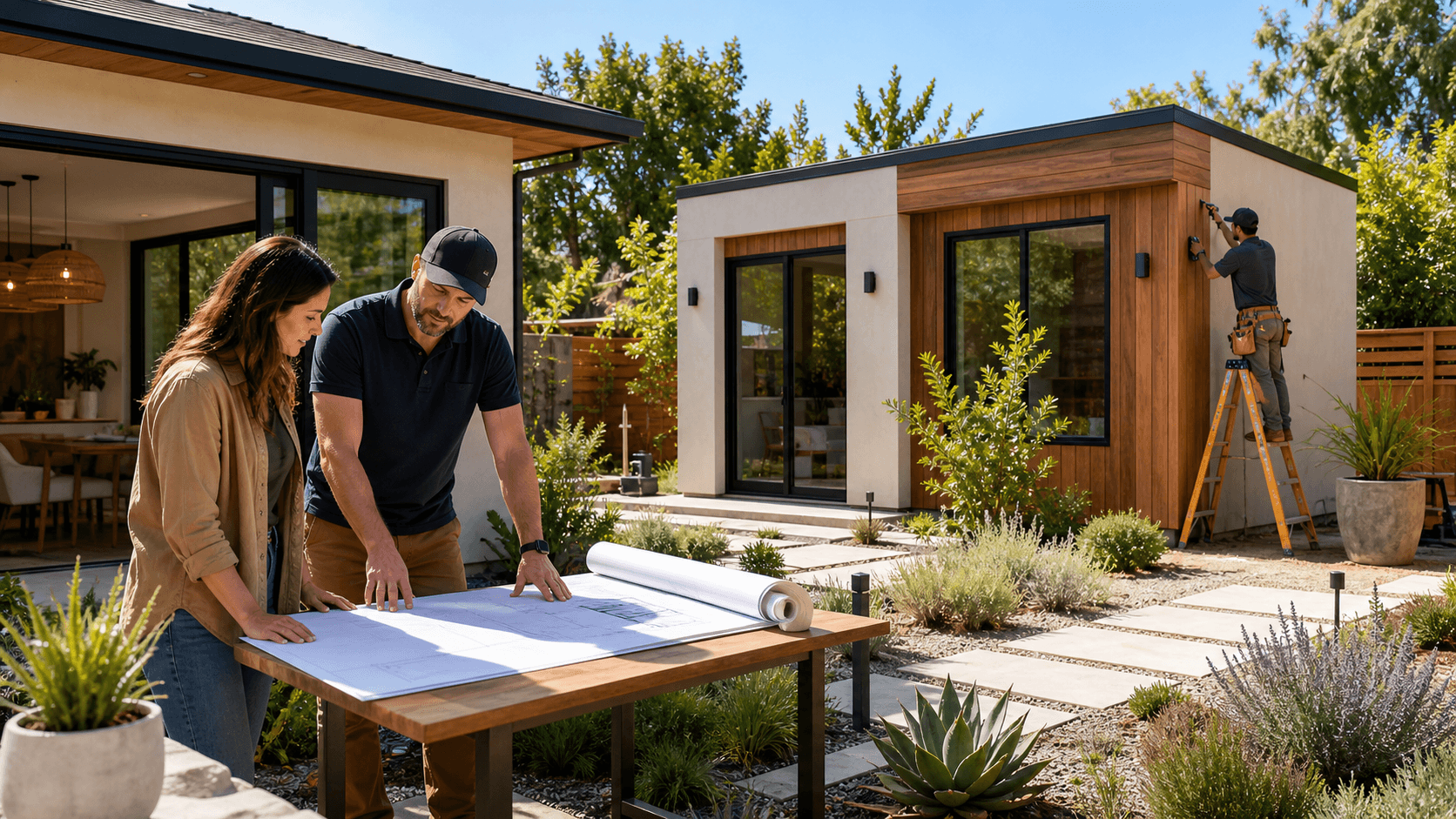
- Custom design that fits your property and goals
- Financing approval with a lender who understands ADUs
- Permit submission and coordination with your city
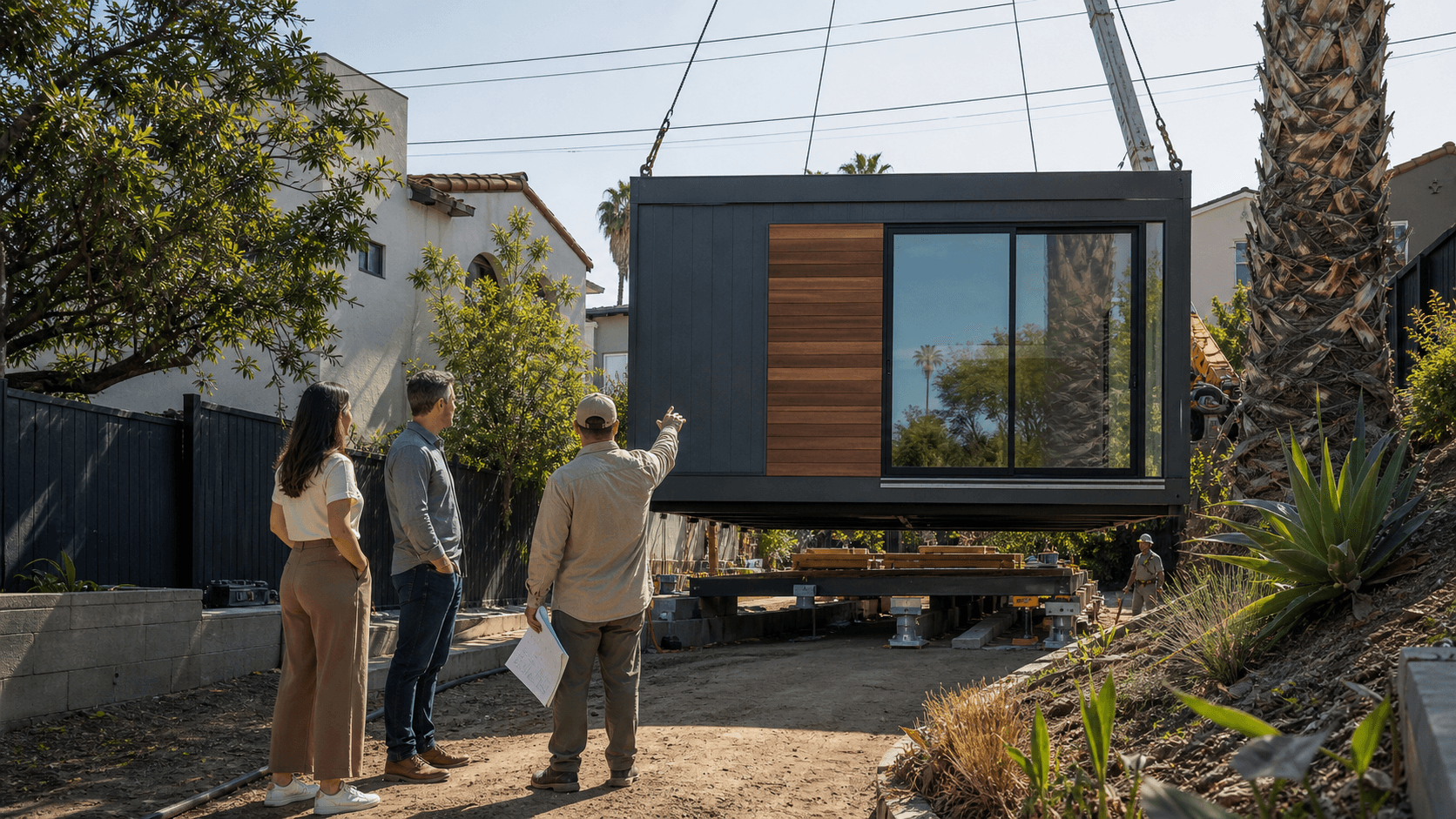
- Construction with a licensed, insured crew
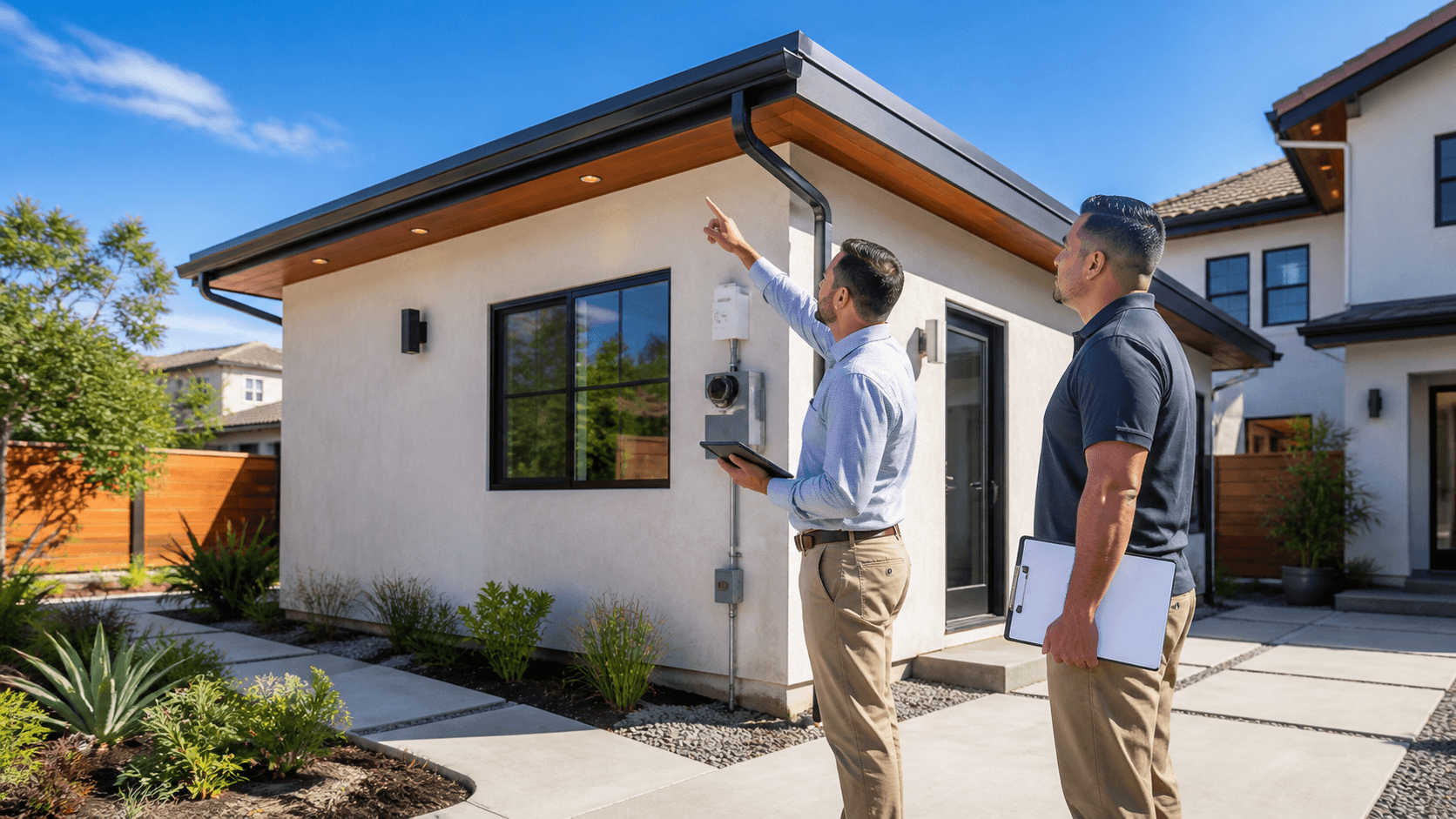
- Tenant placement once the ADU passes final inspection
In warm‑weather California, backyard living is attractive all year, so there is steady interest from renters who want a private, outdoor‑friendly home. Starting your planning before the next building rush can mean you are collecting rent sooner instead of waiting through another full cycle.
At One Stop ADU Center, we focus on turning underused yard space into luxury, code‑perfect ADUs through a coordinated, design‑build approach. With licensed accessory dwelling unit builders and smart financing support, a high‑end backyard home that pays for itself over time is not just a dream; it is a clear, step‑by‑step project that can be done with little to no money out of pocket.
Get Started With Your Project Today
If you're ready to add more living space, increase your property value, and create long-term flexibility, our team at One Stop ADU Center is here to help. As experienced licensed accessory dwelling unit builders, we guide you from initial concept through final inspection with clear communication at every step. Reach out today so we can review your goals, answer your questions, and map out a practical plan tailored to your property.