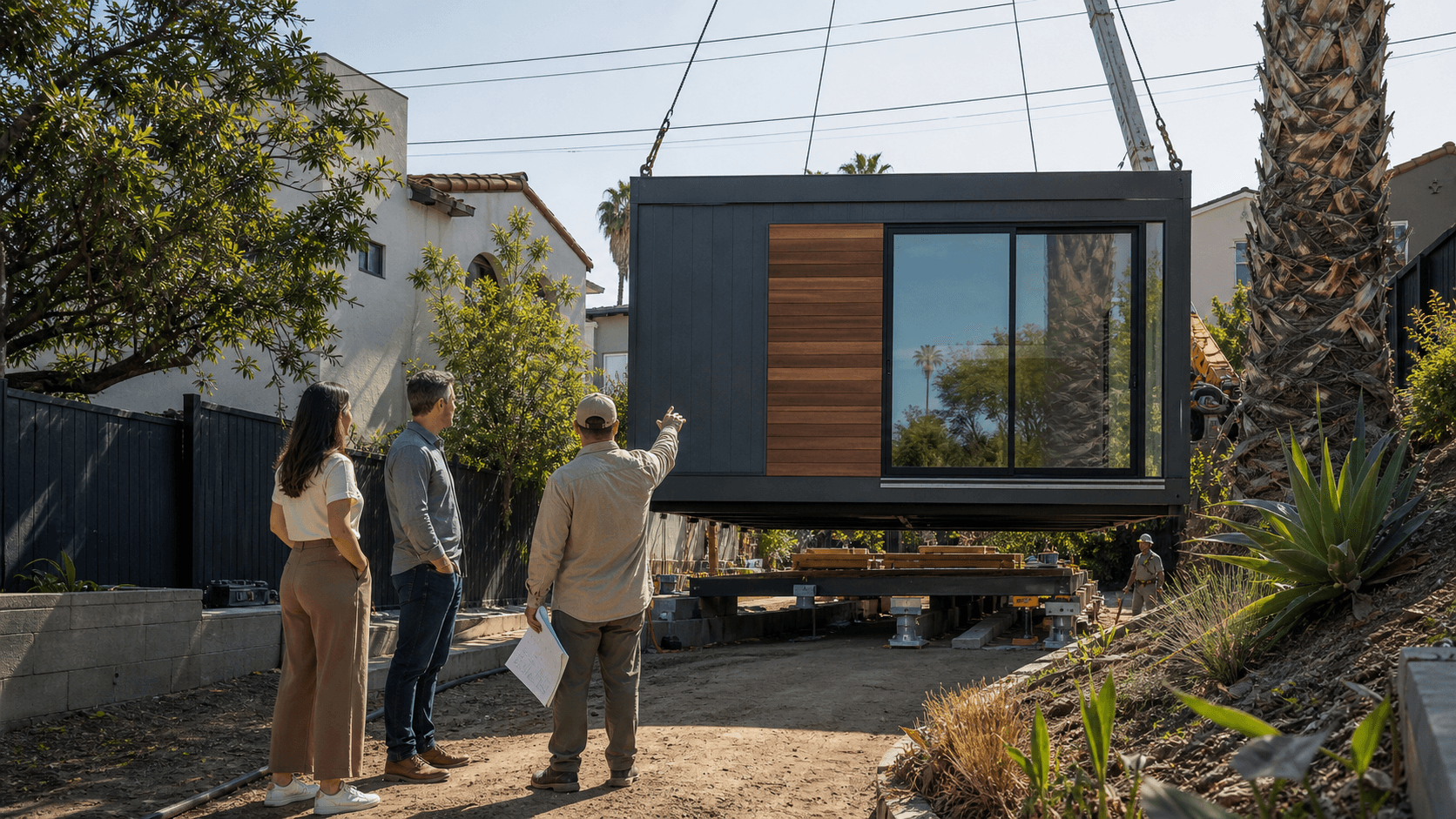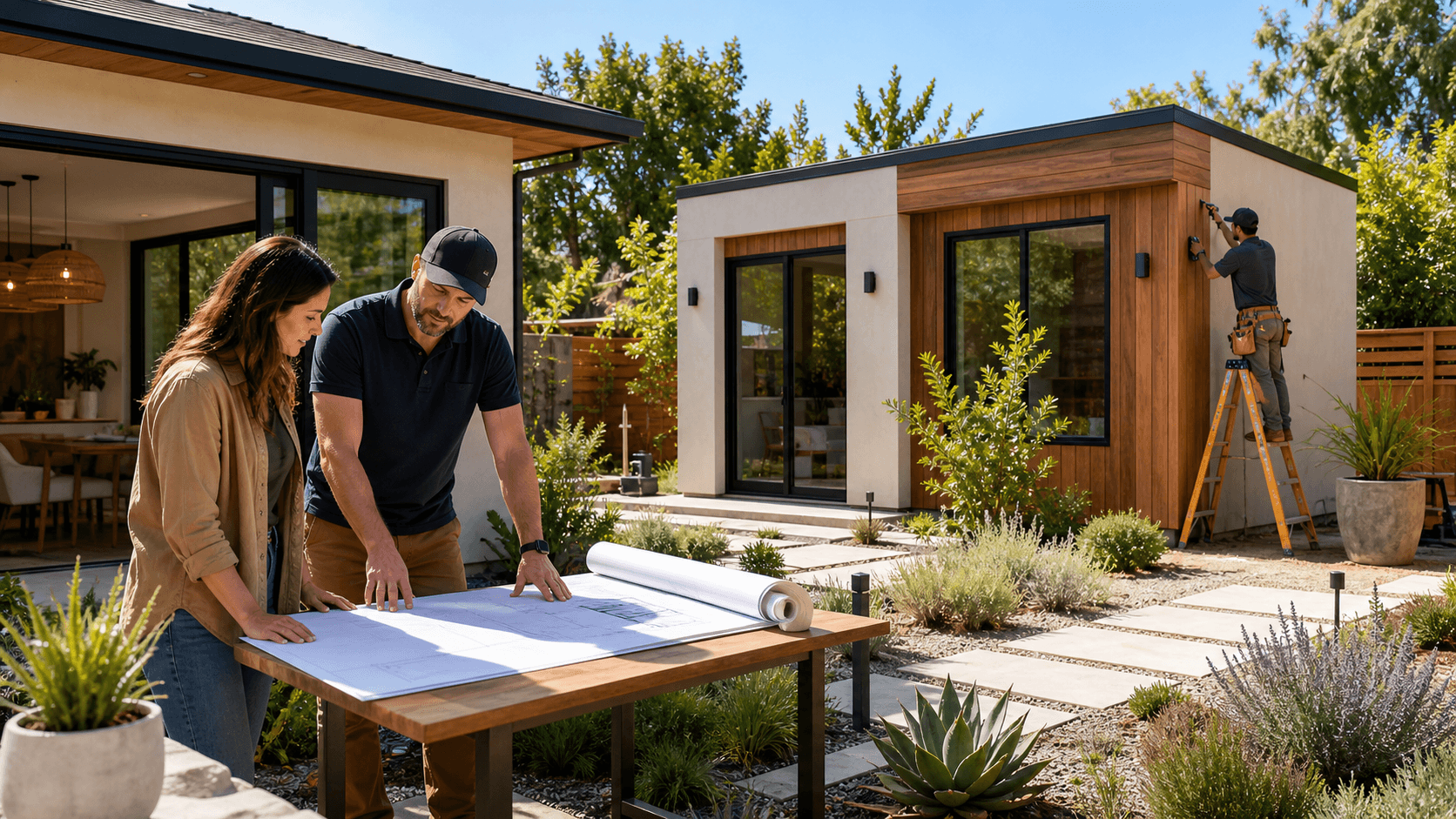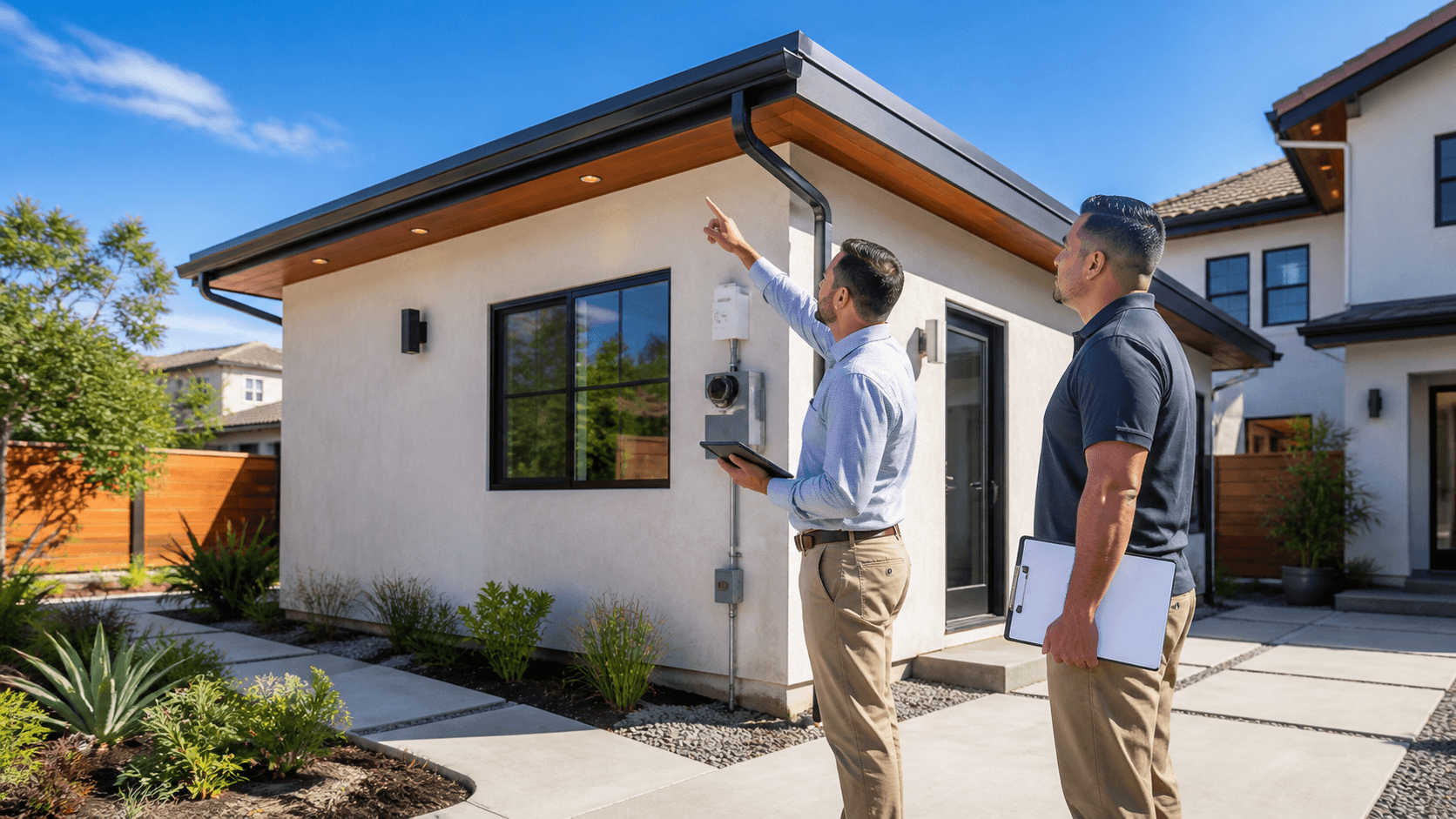
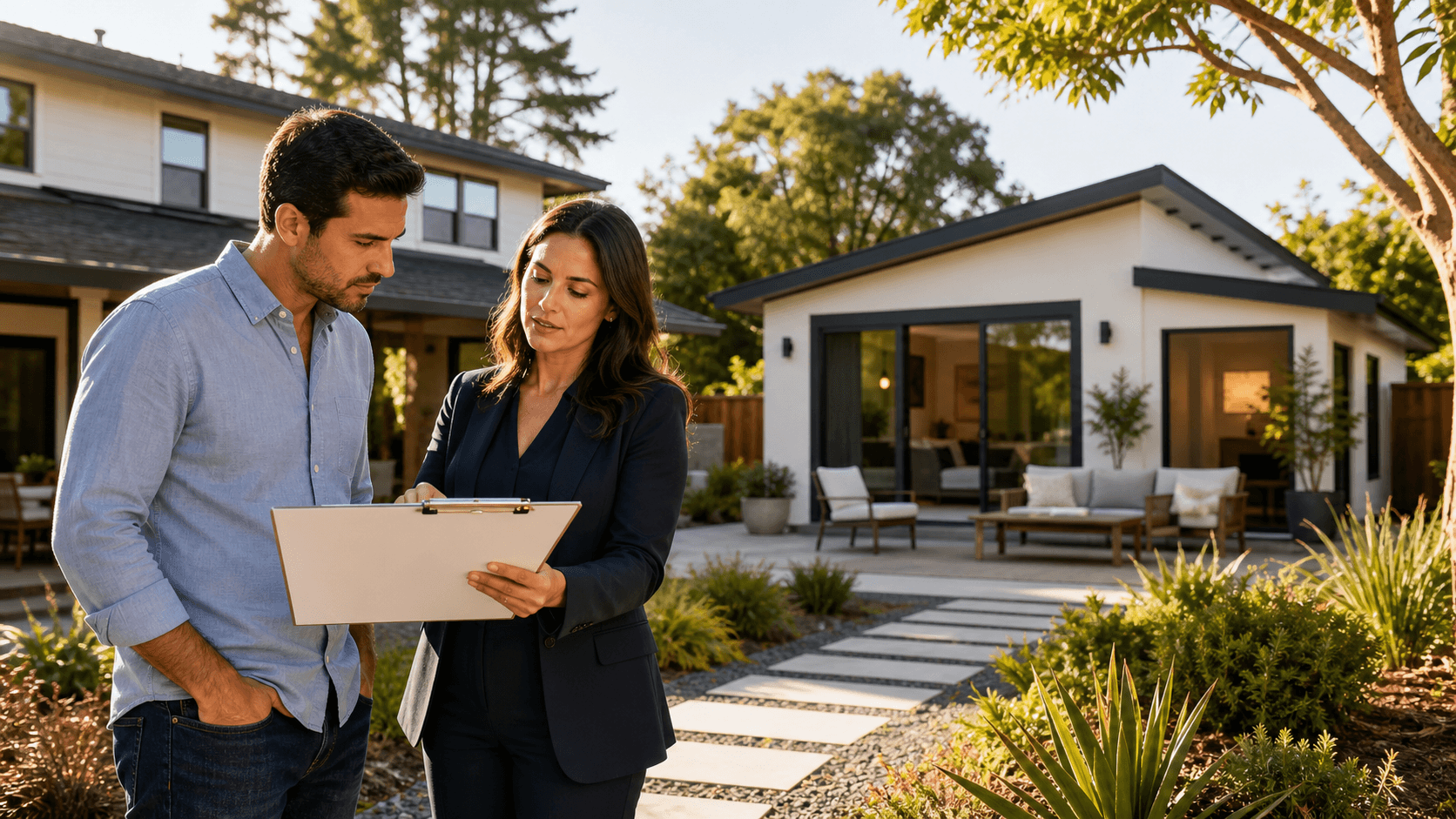
Building a custom accessory dwelling unit (ADU) in your backyard with no cash due at signing can be possible for some California homeowners when the project is structured carefully and financed appropriately. With the right loan type and a coordinated plan, it may be feasible to turn unused yard space into a rental unit without using existing savings. This article explains how low- or zero-upfront-cost ADU financing typically works and how it connects with design, permitting, and construction so the new unit is positioned to generate rental income.
The aim is to outline what may be possible on your property, clarify the major steps, and help you understand how a backyard ADU could offset some or all of its costs through rent, depending on market conditions and your specific situation.
Turning a Backyard Into Rental Space with Minimal Upfront Cost
In the ADU context, "$0 out of pocket" or "no money due at signing" generally refers to project costs being incorporated into a financing package rather than being paid directly from your bank account. In practice, this often means that design and architectural plans, city fees and permits, and site work and construction expenses are bundled into a single budget that the loan is intended to cover. Instead of writing checks as each phase occurs, the financing structure is set up so that costs are paid over time via loan repayment.
Even with "$0 out of pocket" messaging, costs are not eliminated; they are shifted into a repayment schedule. Depending on the loan product and lender terms, payments typically begin as construction progresses (when loan funds are drawn) or later, when a construction loan converts to a long-term loan.
Starting planning in the fall can help align financing, design, and permitting with a seasonal schedule. Homeowners who begin now may be able to move through permits during winter, begin construction in early spring, and market the ADU for rent by summer, subject to local timelines and any delays. Beginning earlier can also help secure loan terms before potential changes in interest rates or local regulations.
Current Conditions for Backyard ADUs in California
Housing demand in many parts of California remains high, and rental inventory can be limited in certain markets. In this environment, a backyard ADU can be considered for:
- Long-term rental income.
- Housing for adult children or parents.
- A separate office or guest space that may also add to overall property value.
Borrowing costs fluctuate over time. When interest rates increase, the total cost of borrowing over the life of a loan can grow, even if initial monthly payments do not change dramatically. Securing ADU financing earlier rather than later can help manage long-term borrowing costs, though timing decisions should be based on individual financial circumstances and professional advice.
Many homeowners find October and the fall season to be a practical planning period. A general timeline might look like:
- Fall: Initial feasibility review, basic financial assessment, and loan prequalification.
- Winter: Design work, engineering, and permit submission to the city.
- Spring: Foundation, framing, and interior and exterior construction.
- Summer: Photography, marketing the ADU, screening tenants, and lease signing.
In many parts of California, relatively mild winters can allow construction to proceed with fewer weather-related delays than in colder climates, although schedules always depend on local conditions and contractor availability.
How Low- or Zero-Upfront ADU Financing Typically Works
A custom backyard ADU usually involves several cost categories. These commonly include design and drafting, engineering and permits, site preparation and foundation work, utility connections, exterior construction elements such as framing and roofing, and interior finishes such as fixtures and appliances.
With certain loan products, some or all of these costs can be financed rather than paid in cash at each stage. Common options include:
- Home Equity Lines of Credit (HELOCs): A revolving line of credit secured by home equity.
- Home Equity Loans: A fixed lump sum secured by home equity with set payments.
- Cash-Out Refinances: Replacing an existing mortgage with a larger one and using the difference to fund the project.
- Construction-to-Permanent Loans: Loans that finance construction and then convert to a long-term mortgage.
- ADU-Focused Loan Programs: Specialized products from lenders familiar with ADU projects, where available.
In many marketing materials, "no money down" or "$0 out of pocket" refers to financing that covers design through construction, so owners do not write checks for each project phase. However, specific terms depend on the lender and may involve closing costs, reserves, and other requirements.
Payment timing also varies by product. Payments may begin either when funds are first drawn for construction or after construction is complete and the loan converts to a permanent product, according to loan terms.
Rental income from the ADU may help offset some or all of the monthly loan payment. Actual cash flow depends on factors such as rent levels in your market, vacancy, maintenance and operating costs, taxes, insurance, and any property management fees. There is no guarantee of break-even or positive cash flow, and owners should run detailed projections before proceeding.
Working with ADU Builders and Lenders
Financing can be one of the more complex aspects of an ADU project. Loan applications, appraisals, and lender conditions often require detailed documentation and coordination, which can affect both timeline and scope if details are missed or delivered out of sequence.
Full-service ADU firms or experienced builders may assist by:
- Reviewing basic equity and borrowing capacity with you (not as a substitute for formal financial advice).
- Referring you to lenders that offer ADU-friendly loan products.
- Preparing project budgets and plan sets in a format appraisers and underwriters can use.
- Coordinating inspections and paperwork to align construction milestones with lender draw schedules.
When design, permitting, construction, and lender communication are coordinated effectively, it can reduce the risk of unexpected change orders and cost overruns that might otherwise require additional cash. However, homeowners should review all contracts and loan documents independently and consider consulting legal and financial professionals.
Designing an ADU with Strong Rental Appeal
To support higher potential rent, ADU design and finish choices matter. Elements that often influence rentability and perceived value include:
- A functional floor plan with open living space and adequate storage.
- Ample windows and natural light.
- Thoughtful placement and screening to maintain privacy between the main home and the ADU.
- Durable, attractive finishes in kitchens and bathrooms.
- In-unit laundry and dependable heating/cooling systems.
Custom ADU designers and builders can align plans with local appraisal standards and rental trends in your area. The objective is to create a space that appraises appropriately for the lender, appeals to stable, long-term tenants, and justifies competitive rent levels relative to similar units in the neighborhood.
Future-oriented design can also help maintain value over time. Consider:
- Energy-efficient heating, cooling, and appliances.
- Electric vehicle (EV) charging infrastructure where appropriate.
- Wider doors, fewer steps, and other features that improve accessibility.
- Flexible layouts that can transition from rental use to family use if needs change.
These choices can support long-term durability, comfort, and appeal for a range of occupants.
From Permits to Occupancy with Minimal Upfront Cash
A sample, high-level timeline for a low- or zero-upfront-cost ADU project in much of California might look like this:
- Fall: Site visit, feasibility review, preliminary budget, and loan prequalification.
- Late Fall to Winter: Design, engineering, and permit submission to the local jurisdiction.
- Winter to Early Spring: Permit review, revisions if needed, approvals, final budgeting, and loan closing.
- Spring: Groundwork, utilities, framing, and interior build-out.
- Early Summer: Final inspections, walk-through, and punch-list completion.
- Summer: Photography, marketing the unit, tenant screening, and lease execution.
Key process milestones are important because they reduce surprises and help the financing plan match the construction plan. Early in the process, homeowners typically confirm zoning, setbacks, and any local ADU regulations so design work is not wasted. Before final loan approval, design decisions are often aligned with appraisal and lender requirements to avoid delays or budget gaps. As construction proceeds, inspections are scheduled in coordination with the lender's draw schedule so funds are released when milestones are verified. Finally, the transition from construction completion to tenant placement is planned to minimize vacancy and accelerate rental income.
When one provider or a well-coordinated team manages design, permitting, construction, and rental preparation, the shift from "under construction" to "tenant-ready" can be more efficient. Nonetheless, timelines and outcomes vary based on site conditions, local review times, contractor capacity, and market demand. Homeowners should treat all projections as estimates rather than guarantees and build contingencies into both budget and schedule.
Get Started With Your Project Today
Ready to turn your backyard into a functional, beautifully designed ADU that fits your lifestyle and budget? At One Stop ADU Center, we listen to your goals, walk you through every step, and handle the details so your project moves forward with confidence. Partner with our experienced custom ADU builders to explore design options, permitting, and construction tailored to your property. Reach out today so we can help you map out a clear, realistic plan for your ADU.