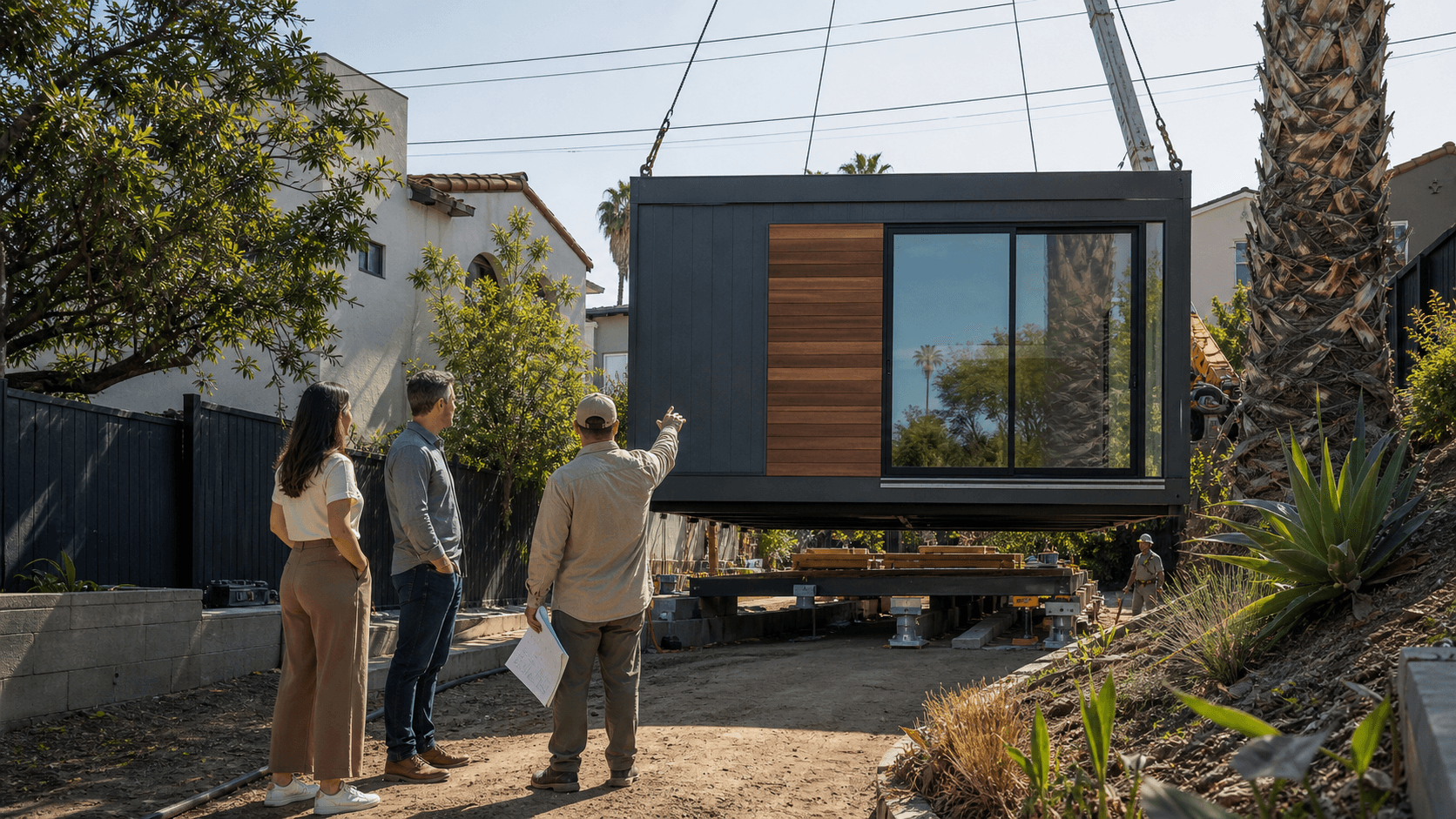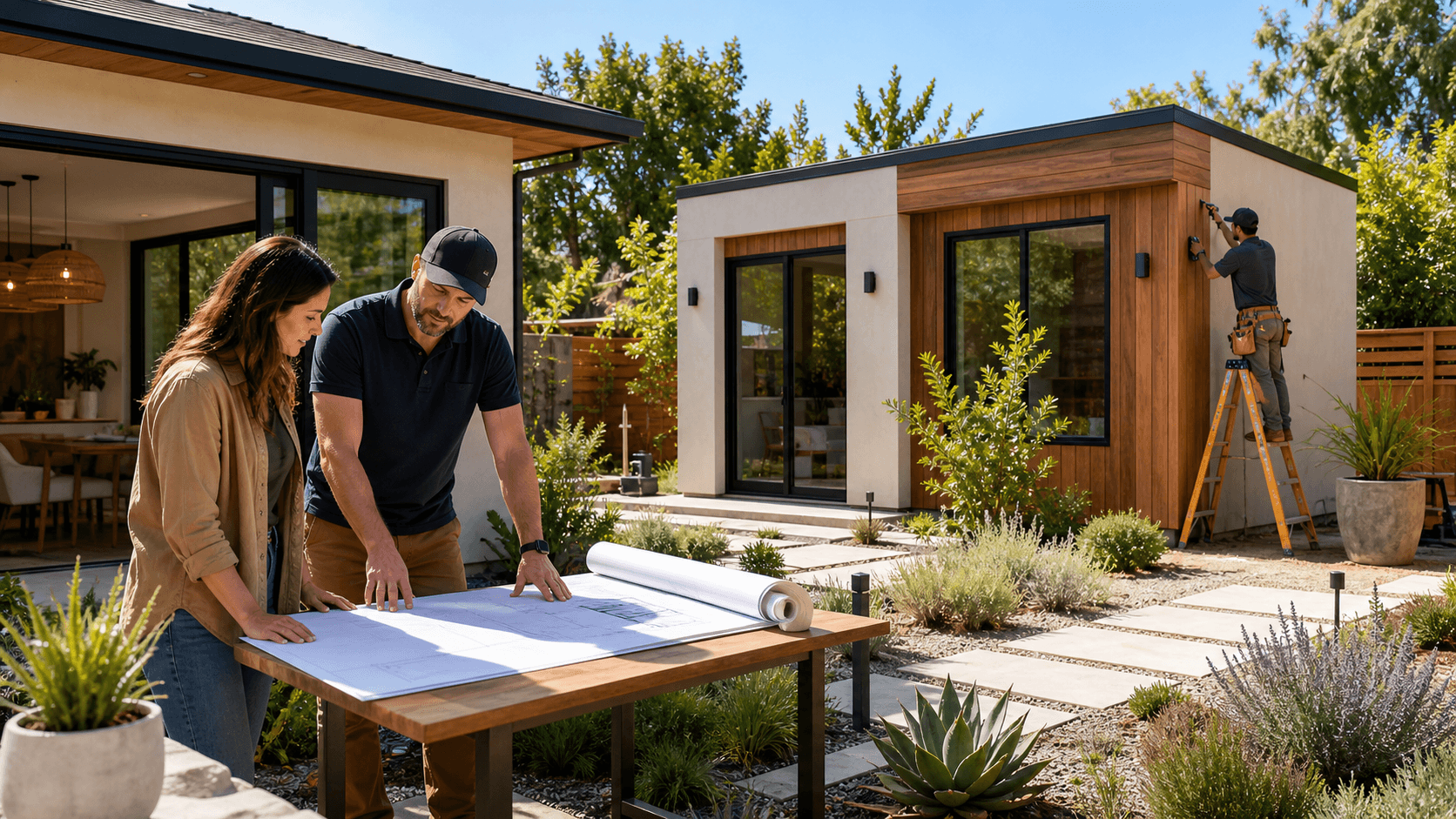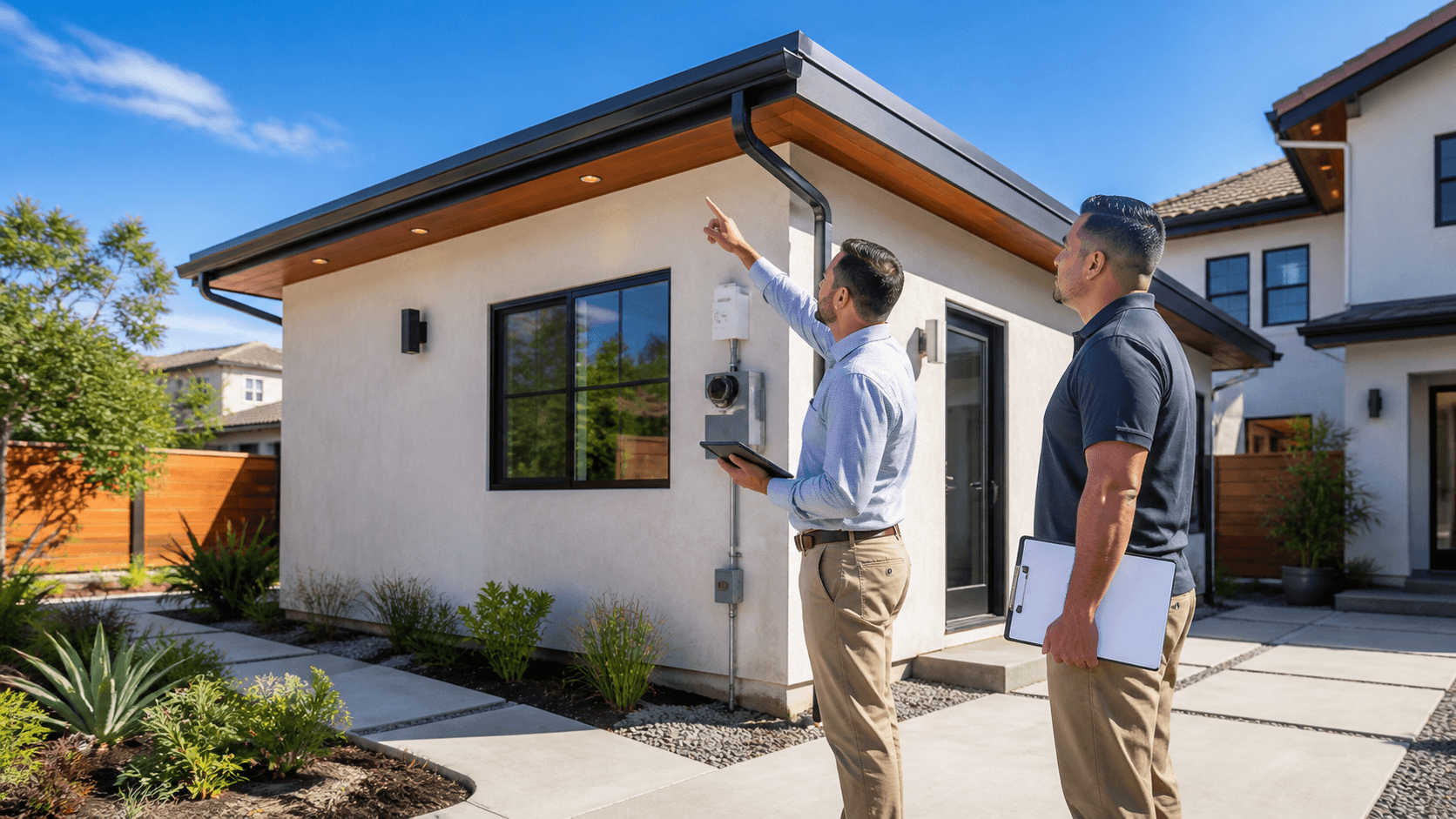

Turn Your Backyard Into Income with Little Cash Upfront
Turning a plain Los Angeles backyard into a high-end granny flat that actually pays for itself is not a dream. For many homeowners, the main thing in the way is cash. You may have plenty of equity in your home, but not much in your bank account. That is where smart financing and the right team make all the difference.
In this article, we walk through how a granny flat can be built with minimal money out of pocket, what closing-cost credits really do, and how to avoid common lender, appraisal, and draw-process headaches. If you are equity-rich, a bit cash-tight, and curious about granny flat builders in Los Angeles, this will help you see what is possible in a clear, simple way.
Demand for rentals is high, ADU laws keep opening more doors, and well-designed luxury backyard units are in demand. A granny flat can become a long-term income source, add value to your property, and support family if needed. With the right strategy, you can use the equity you already have to get there.
We will talk about zero-to-low cash options, how lender fees and credits work, what can go wrong with appraisals and construction draws, and why having an experienced ADU partner on your side matters from the first call to tenant move-in.
How Zero-Out-of-Pocket ADU Financing Really Works
When people hear "zero out of pocket," they often think it sounds too good to be real. What it usually means is that your savings stay mostly in your account, and your home equity does the heavy lifting.
Common paths for funding a granny flat include:
- Cash-out refinance, where you replace your current mortgage with a larger one and pull equity out
- Home equity lines or similar products that give you access to a set amount of funds
- Renovation or ADU-focused loans that combine design, permits, and construction in one package
- Specialty loans that look at the "as-completed" value of your property, including the new ADU
"Minimal cash in" is about how lenders view risk. They look at:
- Loan-to-value ratio, which compares your total loan amount to your home's value
- Debt-to-income ratio, which looks at your total monthly payments compared to your income
- Your credit profile and payment history
Many Los Angeles homeowners are surprised to learn how much equity they have after recent price growth. Even if you feel stretched by everyday expenses, that equity can often be shaped into financing that covers design, permits, and build costs, with little or no money due at closing.
Fall is also a smart planning window. Starting the loan and design process around October can help you:
- Lock in a rate before year-end shifts
- Move through permits during the holiday period, when you are already juggling schedules
- Aim to finish construction closer to spring or summer, which can be a stronger time for lease-up
A strong ADU team pulls the pieces together so your financing fits your cash-flow goals, your comfort with payments, and your long-term plan for the property.
Mastering Closing-Cost Credits so You Keep Cash in Hand
Even if your loan covers the ADU build, closing costs can surprise you. For a granny flat loan, closing costs usually include:
- Lender fees such as origination and underwriting
- Title and escrow charges
- Recording and notary fees
- Prepaid items like property taxes and homeowners insurance
These items can add up, but they do not always have to come straight out of your pocket. Lender credits can be used to offset a big part of closing costs. In many cases, this means accepting a slightly higher interest rate so the lender can give you a larger credit.
That trade-off can make sense when:
- Your main goal is to keep as much cash on hand as possible
- You plan to hold the property long-term and focus on stable rental income
- You value a stronger cash cushion for reserves and any surprises during construction
There are also ways to structure things so certain costs are rolled into the loan amount, as long as you stay inside the lender's limits. Sometimes an appraisal fee credit or other small fee credits can be negotiated, especially if there are delays that are outside your control.
An experienced ADU team can work with your loan officer to line up the right mix of credits and timing, especially toward the end of the year when markets can shift and lenders may adjust programs or pricing.
Lender Fees, Rate Buydowns, and Hidden Cost Traps
Lender fees can feel confusing because they show up under different names on your loan estimate. The most common ones are:
- Origination fee, what the lender charges to set up the loan
- Underwriting and processing fees, for reviewing your file and paperwork
- Discount points, extra money you pay upfront to lower the interest rate
One key choice is whether to pay points to get a lower rate, or keep that money for other needs. Paying points can lower your monthly payment, but it raises your cash needed at closing. Many ADU homeowners prefer to keep cash available for:
- Reserves, so they feel safe during and after construction
- Design upgrades that can help rent out the unit faster or for more
- A contingency buffer in case something changes mid-build
Hidden or easy-to-miss costs can include reinspection fees, rate-lock extension fees if the project runs longer than planned, or out-of-pocket change orders that the loan does not cover. These can sneak up if you are not watching both the loan timeline and the construction timeline.
A clear, written breakdown of fees, credits, and expected cash to close is one of the best tools you can have. The right ADU partner helps you read those fee sheets, ask good questions, and spot anything that does not line up with your goals before you sign.
Avoiding Appraisal Surprises and Draw-Process Delays
Financing a granny flat usually involves an "as-completed" appraisal. That means the appraiser is giving an opinion of what your property should be worth after the ADU is built, not just today. For ADUs, they may look at:
- Plans and detailed specs for the new unit
- Recent sales of similar homes that already have ADUs
- Local rental comps to support expected income, especially for high-end units
Problems often come up when the appraiser does not see full details. Thin plans, missing finishes, or unclear square footage can lead to a lower value. So can rent numbers that look too high for the area.
Construction loans also use a draw process. Money is released in stages, like:
- An initial draw for start-up work
- Milestone draws for foundation, framing, rough systems, and finishes
- A final draw after completion and final inspection
If inspections are late or paperwork is incomplete, those draws can stall. That can slow the build and create stress between the homeowner, lender, and contractor.
A turnkey ADU partner helps by preparing a strong appraisal package, with complete plans and clear finishes, and by lining up inspections and documents ahead of each draw request. This keeps funds moving and helps your contractor stay focused on building, not chasing paperwork.
Choosing the Right Granny Flat Builder to Protect Your Cash
Not all granny flat builders in Los Angeles are set up to handle low-cash or more complex financing. When your savings are tight, the wrong team can cost you time, money, and sleep.
Key things to look for include:
- In-house design and permitting, so changes do not get lost between separate firms
- Experience working with ADU-focused lenders and loan products
- Clear, written scopes of work that match what the lender is funding
- A process for answering lender, appraiser, and inspector questions quickly
Having one main point of contact can cut down on delays. When the same team handles design, permits, construction, and lender coordination, it is much easier to adjust plans, send updated budgets, or respond to a lender condition without slowing everything down.
Tenant placement is another big part of the financial picture. A smart plan looks at:
- Timing completion so your unit hits the market when more renters are searching
- Realistic rent numbers that match similar high-end ADUs in your area
- Solid screening so you get tenants who pay on time and care for the space
At One Stop ADU Center, we focus on an end-to-end process. That includes feasibility, design, permits, financing coordination, construction, and tenant placement, all aimed at protecting your budget, your timeline, and your long-term return on your new granny flat.
Get Started With Your Project Today
If you are ready to turn unused space into a comfortable, income-generating ADU, our team at One Stop ADU Center is here to guide you through every step. As experienced granny flat builders in Los Angeles, we handle everything from initial design and permits to construction and final inspections. Reach out today so we can discuss your goals, budget, and timeline, and create a tailored plan for your property.