California Prefab ADU vs. Custom Builders: Key Contract Details
Building an ADU in your backyard can feel exciting and stressful at the same time. Most homeowners focus on big questions like: prefab or custom, how fast can it be done, and how soon can it start earning income. Those things matter, but the real pain often comes from what is hiding in the contract, not from the floor plan or finishes.
The small print controls who pays when something goes wrong, who is responsible when the city pushes back, and who owns the risk on your property. That is where prefab ADU installers and custom builders can be very different, even if their photos look similar. At One Stop ADU Center, we work as a full-service California ADU specialist, so design, permitting, financing support, and construction all connect under one team. As we move into fall, with shorter days, possible rain, and year-end tax planning, the quality of your contract, site protection, and warranty coverage deserve as much attention as speed or style.
What Prefab ADU Installers Really Cover in the Contract
Prefab ADU installers usually split the project into two worlds: the factory world and your yard. That split can create gaps if the contract is not very clear.
A typical prefab contract might break things up like this:
- Factory scope, which often covers the building itself, finishes, fixtures, and some internal systems
- On-site scope, which might include foundation, utility hookups, and final connections
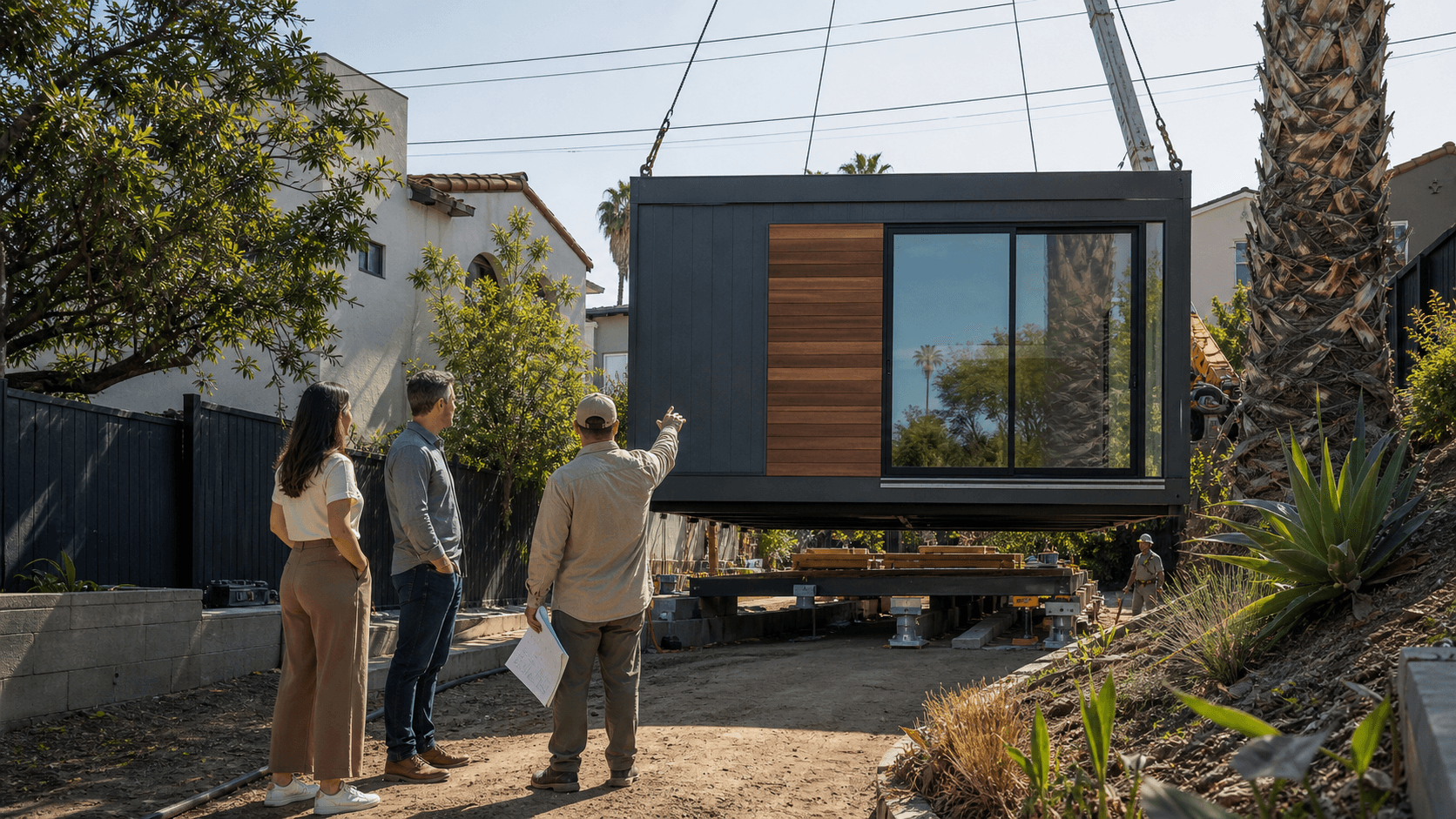
- Transport scope, which may or may not clearly say who owns the unit while it is on the road or hanging from a crane
Where homeowners get surprised is in the long list of exclusions. It is common to see items like:
- Utility trenching beyond a certain distance
- Major grading or retaining walls
- Soft-story or structural work on an existing garage
- Extra engineering if the city asks for more details
Many prefab contracts also use fuzzy phrases like "owner to provide" without spelling out what that really includes. Is the owner arranging tree trimming for crane access, extra surveys, or temporary power? If soil problems show up, does the installer handle the fix, or is that a change order that you must approve and pay for?
Seasonal timing can make these gray areas more expensive. In fall and winter, you may face:
- Muddy access that needs extra gravel or temporary paths
- Delays because trucks cannot safely reach the site after rain
- Rescheduling crane days if the ground is too soft
If the contract says weather delays are "not the installer's responsibility" or that you must provide "clear, stable access," you may end up paying for extra work that you did not plan for. Clear language on who covers what, and when, can protect you from surprise charges when the first real rain hits.
Custom ADU Builder Contracts and Hidden Liability Gaps
Custom ADU builders often offer more flexibility in design, but the contract can spread risk across several parties. Many use either fixed price or cost-plus contracts, each with its own traps.
Custom contracts often include:
- Allowances for things like cabinets, tile, or lighting, which can be unrealistically low
- Separate agreements for design, structural engineering, and permitting
- Exclusions for surveys, soils reports, or special inspections
When design, engineering, and building are handled by different companies, important questions appear:
- If the architect's plans are missing details, who pays for fixes in the field?
- If the city requires re-design, is that an extra fee or included in the original scope?
- If a subcontractor is underinsured or not properly licensed, who is responsible for damage or injury?
A very low bid can sometimes mean the builder did not investigate the site in detail. That can lead to change orders when they discover:
- Old or undersized sewer lines that need replacement
- An existing garage slab that is cracked or not up to code
- Poor soils that require deeper foundations or piers
The contract language on "unforeseen conditions" often decides who pays. If it is written broadly in favor of the builder, almost anything uncovered in the ground or behind walls can become your cost, even when it feels like something a professional should have expected.
Warranties, Repairs, and Who Pays When Something Fails
Once your ADU is built, warranties are your safety net. The problem is that prefab ADU installers and custom builders often layer warranties from different sources, and the gaps between them can leave you stuck in the middle.
With prefab ADU installers, you might see:
- A factory structural warranty for framing and major components
- Separate warranties for systems like HVAC, water heaters, or windows
- Shorter coverage on site work such as foundation or utility connections
Custom builders usually offer:
- A builder warranty for workmanship and some materials
- Manufacturer warranties for appliances, windows, and roofing
- Limited coverage for issues that the builder blames on "owner maintenance" or "wear and tear"
Key details that matter in both cases include:
- When the warranty clock starts, at delivery, installation, or final inspection
- Whether labor is covered, or only replacement parts
- Who pays for access, like opening drywall, trenching, or removing finishes to reach a pipe or wire
Seasonal issues are a big test. Heavy fall and winter storms can reveal:
- Roof or window leaks that only show up during strong rain
- Site drainage problems that cause water to flow toward the ADU
- Slab or foundation movement that appears as new cracks
Poorly written exclusions may say that anything related to drainage, "water intrusion," or "settling" is not covered. That can leave you paying for repairs to a brand-new unit if the underlying cause is not clearly defined in the contract and warranty package.
Liability, Insurance, and Who Owns Risk on Your Property
Any ADU project brings people, trucks, and heavy tools onto your property. Before work starts, it should be clear which risks the installer or builder carries and which risks you still own.
Homeowners should look for confirmation of:
- Worker's compensation coverage for everyone on site
- General liability insurance in case of property damage or injury
- Builder's risk or similar coverage during construction
- Language that names the homeowner as an additional insured where appropriate
The contract also needs clear terms on site damage. Vague phrases like "reasonable restoration" might not match your idea of what your yard or driveway should look like when the work is done. Risks to watch for include:
- Cracked driveways or broken pavers from heavy trucks
- Damaged fences or landscaping that were not fully documented before work
- Neighbor property that is bumped, stained, or scraped during access
For prefab projects, cranes and large trucks often need tight turning space. That raises questions about:
- Property line and setback issues if access paths cross close to neighbors
- Responsibility if equipment swings over or briefly uses a neighbor's air space or yard
- Code compliance and encroachment problems that could come up later during a property sale
Clear contract language on permits, code compliance, and access routes helps decide who stands between you and a future dispute.
How One Stop ADU Center Simplifies Contracts and Protects You
At One Stop ADU Center, we focus on treating the ADU as one complete project, not a stack of separate pieces. Because we handle design, permitting, financing support, and construction as a coordinated service, we work to keep scope clear from the first sketch to the final inspection. That reduces finger-pointing between designer, engineer, installer, and builder when questions or surprises come up.
Our approach to contracts is to talk plainly about what is included, what is not, and what might change based on site conditions or city feedback. We walk through:
- Site access, grading, and utilities so there are fewer surprises in the dirt
- How plan review comments from the city can affect design, schedule, and approvals
- Seasonal timing, like shorter daylight hours and holiday slowdowns, that can affect progress
We also discuss how contract terms connect to your bigger goals, such as rental income timing or tax planning around year end. When the entire team is aligned under one ADU specialist, it is easier to balance design choices, permitting strategy, and construction details with the risk and liability language that protects you long after the ADU is finished.
Get Started With Your Project Today
If you are ready to add more living space and long-term value to your property, our team at One Stop ADU Center is here to guide you through every step. As experienced prefab ADU installers, we help you navigate design choices, permitting, and construction with a streamlined process. Reach out today so we can review your goals, evaluate your property, and map out a clear, realistic timeline for your new ADU.