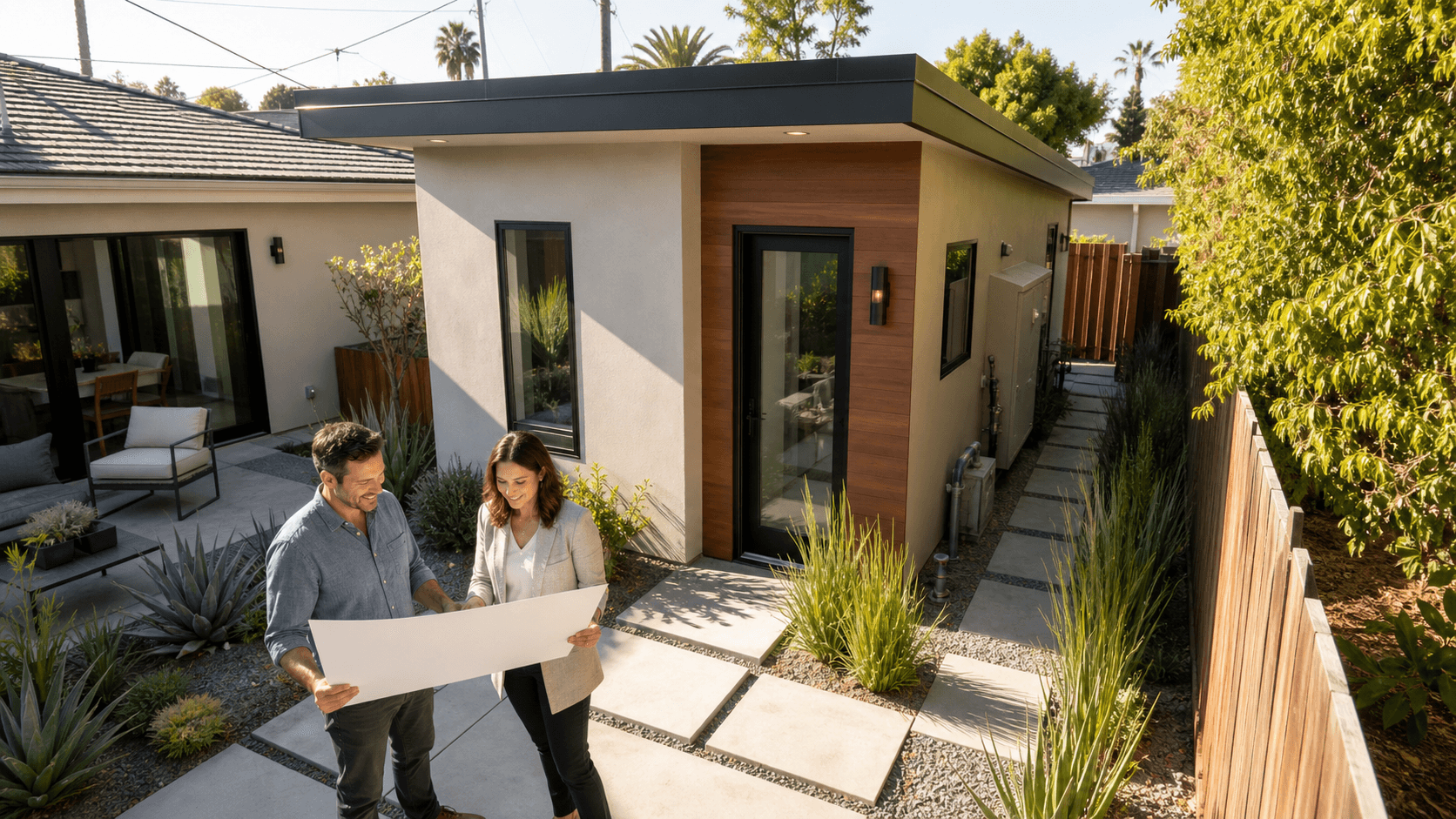
San Diego ADU Design That Actually Works in Real Life
Building an ADU in San Diego is not just about picking a cute plan and dropping it in your backyard. Our climate looks easy on paper, but coastal microclimates can be tough on small homes. Standard plans brought in from other regions often overheat, trap moisture, and wear out materials faster than expected.
When an ADU is not designed for your specific neighborhood sun, wind, and marine layer patterns, you feel it every day. Rooms get stuffy, windows sweat, doors swell, and finishes age early. Smart San Diego backyard home builders think past code minimums and design for how your site actually feels at 7 a.m. in the fog and 4 p.m. in late summer heat.
In this article, we will walk through how local microclimates, corrosion-resistant materials, and smarter ventilation keep your ADU comfortable and durable all year. If you want a backyard home that still feels solid and fresh many summers from now, these details matter.
Reading San Diego's Coastal Microclimates Like a Pro
San Diego does not have one coastal climate; it has hundreds of little pockets. Two homes just a few miles apart can feel totally different during the same afternoon.
Along the coast, areas like Point Loma, Pacific Beach, and La Jolla each get their own mix of fog, breeze, and sun. Go just a bit inland and overnight temps stay warmer and afternoons feel hotter and drier. That is why we start every ADU project with a close look at the actual site.
We look for things like:
- Sun path through the day and through the year
- Shade from your house, neighbor homes, and trees
- Canyon breezes or ocean winds that can be captured
- Nearby walls or fences that might block airflow
For summer comfort, orientation is a big deal. We try to:
- Aim main living spaces and big windows toward gentle morning light
- Avoid large, unshaded west-facing glass that bakes in late afternoon
- Use roof overhangs and trellises sized for San Diego's high summer sun angle
- Plan exterior shading that still lets lower winter sun brighten the space
Along the coast, the marine layer is a daily player. Cool, damp mornings can keep rooms clammy if the layout ignores them. Smart design choices include:
- Placing bedrooms where they warm and dry quickly once the fog lifts
- Upgrading insulation and air sealing at the walls that face the heaviest fog
- Positioning windows and doors so you can flush out that cool damp air fast
When a layout is tuned to how the marine layer rolls in and burns off, the ADU feels fresh instead of musty.
Beating Salt Air and Corrosion Before It Starts
Salt air is sneaky. Even if you are not right on the beach, salt in the air can reach hardware, fixtures, and metal parts. Over time, it eats away at anything that is not protected.
Common shortcuts we see in coastal ADUs include:
- Standard galvanized hardware that rusts quickly
- Exposed steel connectors that stain stucco and siding
- Cheap exterior door slabs that swell, rust, or peel after a few foggy seasons
- AC condensers set in locations where salt spray hits them hard
To fight back, we prefer smarter structural and exterior materials, such as:
- Hot-dip galvanized or stainless steel fasteners and connectors
- Fiber cement siding that handles moisture, fog, and sun well
- Properly treated framing at decks and near grade
- Quality exterior paints and stains rated for UV and wind-driven moisture
High-grade coatings and sealants are not just about looks. They help limit peeling, warping, and small leaks that can turn into bigger issues inside your walls.
The "small stuff" outside can become big repair bills if it corrodes early. We pay special attention to:
- Marine-grade or corrosion-resistant light fixtures
- Durable hose bibbs and exterior plumbing trim
- Protected electrical boxes, covers, and conduit runs
- Stronger door and window hardware and balcony details that will not seize up
These are the details neighbors may not notice at first, but you will notice over the years when things still open, close, and look right.
Ventilation That Tames Marine Layer and Summer Heat
A lot of plans only meet the basic ventilation code on paper. In real life, that can mean stuffy rooms, stubborn moisture, and overworked AC. We want your ADU to breathe naturally whenever possible.
Good cross-ventilation starts with window size and placement. We look at:
- Where afternoon breezes usually come from on your lot
- Which walls are blocked by fences, garages, or neighboring homes
- How to pair low intake windows with higher outlet windows to pull air through
- Which rooms need the strongest natural airflow, like bedrooms and living rooms
Marine layer and cool nights add another twist. Persistent dampness can cause:
- Condensation on window frames and cold corners
- Mold growth in closets and behind furniture
- Musty smells that are hard to fully clear later
To stay ahead of that, we recommend:
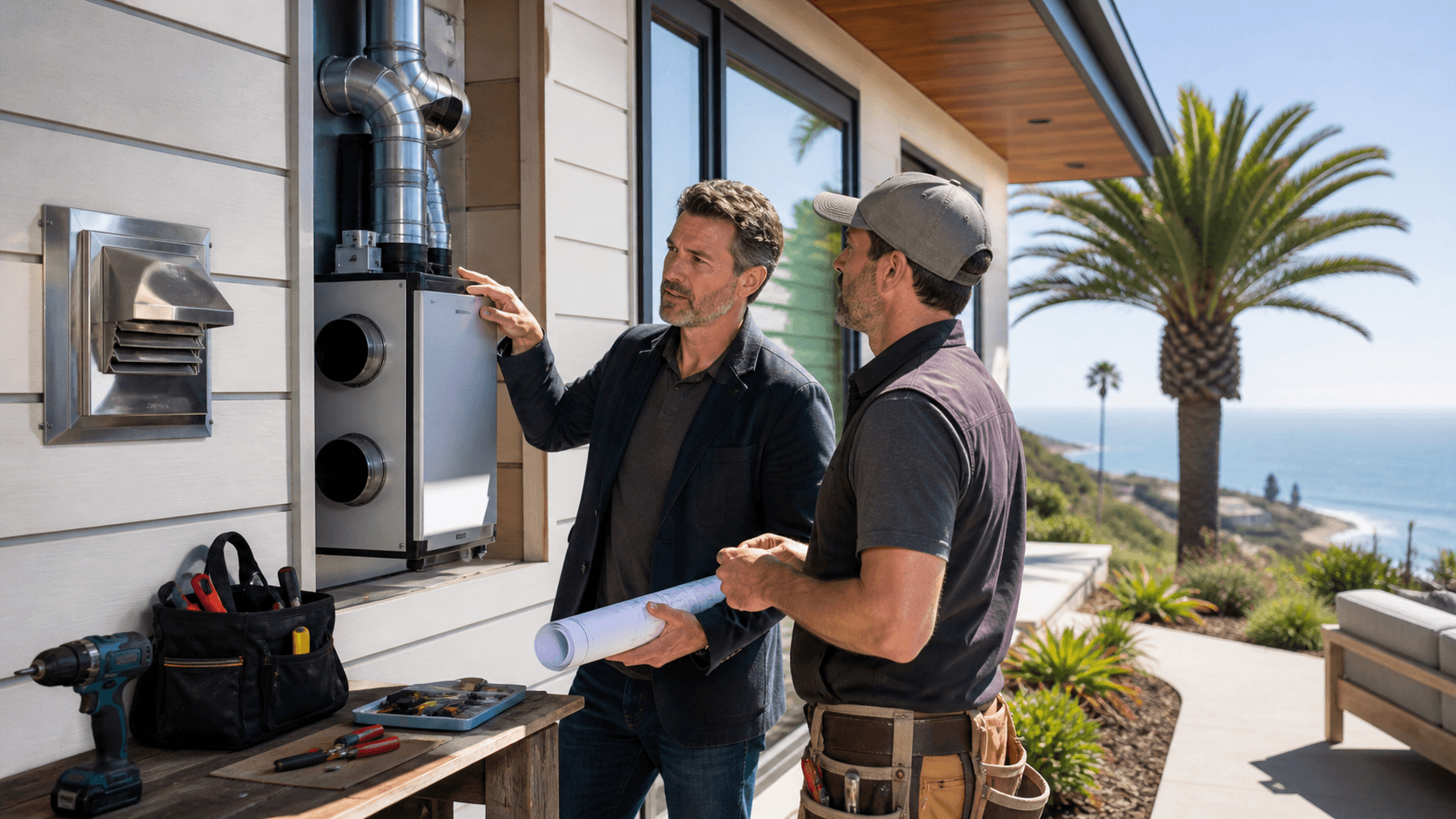
- Balanced mechanical ventilation or an ERV sized for a small home
- Quiet bath fans set on timers or humidity sensors
- Kitchen exhaust that actually gets used in a compact space
Summer and the shoulder seasons bring late-day heat into the mix. Practical strategies include:
- A vented attic or carefully designed roof assembly to release built-up hot air
- Light-colored roofing to reflect sun instead of soaking it up
- Well-sealed ducts so cooled air actually reaches the rooms
- High operable windows or clerestories to let hot air escape in the evenings
We also like small touches such as vented closets and planned exhaust at laundry areas. These details keep moisture from hiding in quiet corners of your ADU.
Smart Interiors for Compact Coastal Living
Inside, smart planning makes a compact ADU feel calm, private, and easy to care for, even close to the beach. Sound, sand, and tenants all shape the choices.
For privacy and noise control, layout matters more than square footage. We often:
- Place closets, bathrooms, or storage between bedrooms and shared walls
- Keep bedroom windows away from busy alleys or the noisiest side of the main house
- Use glazing options that reduce traffic noise where needed
- Aim windows to catch breezes without putting you on display to the neighbors
Durable finishes are your friend when you are dealing with sand and regular use. Good picks include:
- Hard flooring that is easy to sweep and does not mind a bit of grit
- Cabinet finishes that tolerate cleaning and occasional bumps
- Countertops that resist stains and small chips
- Mold-resistant paints and high-quality caulks in wet rooms
Shower systems that drain and dry quickly help a lot in humid pockets. Less lingering moisture means less cleaning time and fewer issues later.
Comfort and energy performance are about balance. In our coastal climate, we focus on:
- Insulation that limits summer heat gain and takes the edge off cooler nights
- Windows with the right solar control for your orientation
- Ceiling fans that let you feel comfortable at slightly higher thermostat settings
- Right-sized mini-split systems that dehumidify and cool without short cycling
When shading, airflow, and mechanical systems all support each other, a small ADU can feel surprisingly luxurious.
Partner with a Builder Who Designs for Your Zip Code
Not all San Diego backyard home builders design with microclimates and salt air in mind. When you talk with potential teams, it helps to ask questions such as:
- How do you study sun, wind, and shade on a specific property?
- What materials do you prefer for coastal hardware, siding, and decks?
- How do you design natural and mechanical ventilation for marine layer conditions?
- Can you show completed ADUs in neighborhoods with a similar distance from the coast?
The right design choices at the start protect your rental income and your time. A well-planned ADU stays comfortable, needs fewer repairs, and supports your property value for many years.
At One Stop ADU Center, we bring design, permitting, financing, construction, and tenant placement together under one roof. That lets us plan each backyard home as a long-term asset, not just a quick build. When your ADU is tuned to your exact microclimate and coastal conditions, it works better for you, your tenants, and your property over the long run.
Get Started With Your Project Today
Transform your unused yard into a high-performing living space with our expert team at One Stop ADU Center. As trusted San Diego backyard home builders, we guide you through every step, from initial concept to final inspection, so your project stays on time and on budget. If you are ready to explore what is possible on your property, reach out and contact us to schedule a consultation today.