Start Your ADU Project Smarter, Not Later
Building an ADU in your Los Angeles backyard is one of the strongest ways to add living space and long-term income to your property, but the process is not instant. Good planning, smart timing, and the right team make all the difference between a smooth build and a stressful one. That is why many ADU contractors in Los Angeles wish homeowners would slow down a bit at the start, then move forward with a clear plan.
Early summer is a great time to begin planning. City staff often face long permit lines, and those lines only grow as more people decide to build. When you start design and permit work now, you give yourself room for reviews, questions, and any small course corrections before you are ready to pour concrete or start framing.
Here is what most homeowners do not realize about ADU timing:
- Design and revisions can take several weeks
- Permitting can stretch longer than expected
- Construction often runs across multiple seasons
- Lease-up and tenant search is its own phase
So when someone expects an ADU to be fast and simple, they are usually thinking about the final weeks of work, not the full path from idea to a tenant paying rent. A full-service ADU partner that handles design, permitting, financing, construction, and tenant placement can tie all of those steps together, which is especially helpful if this is your first time building anything on your property.
What Los Angeles ADU Rules Really Allow You to Build
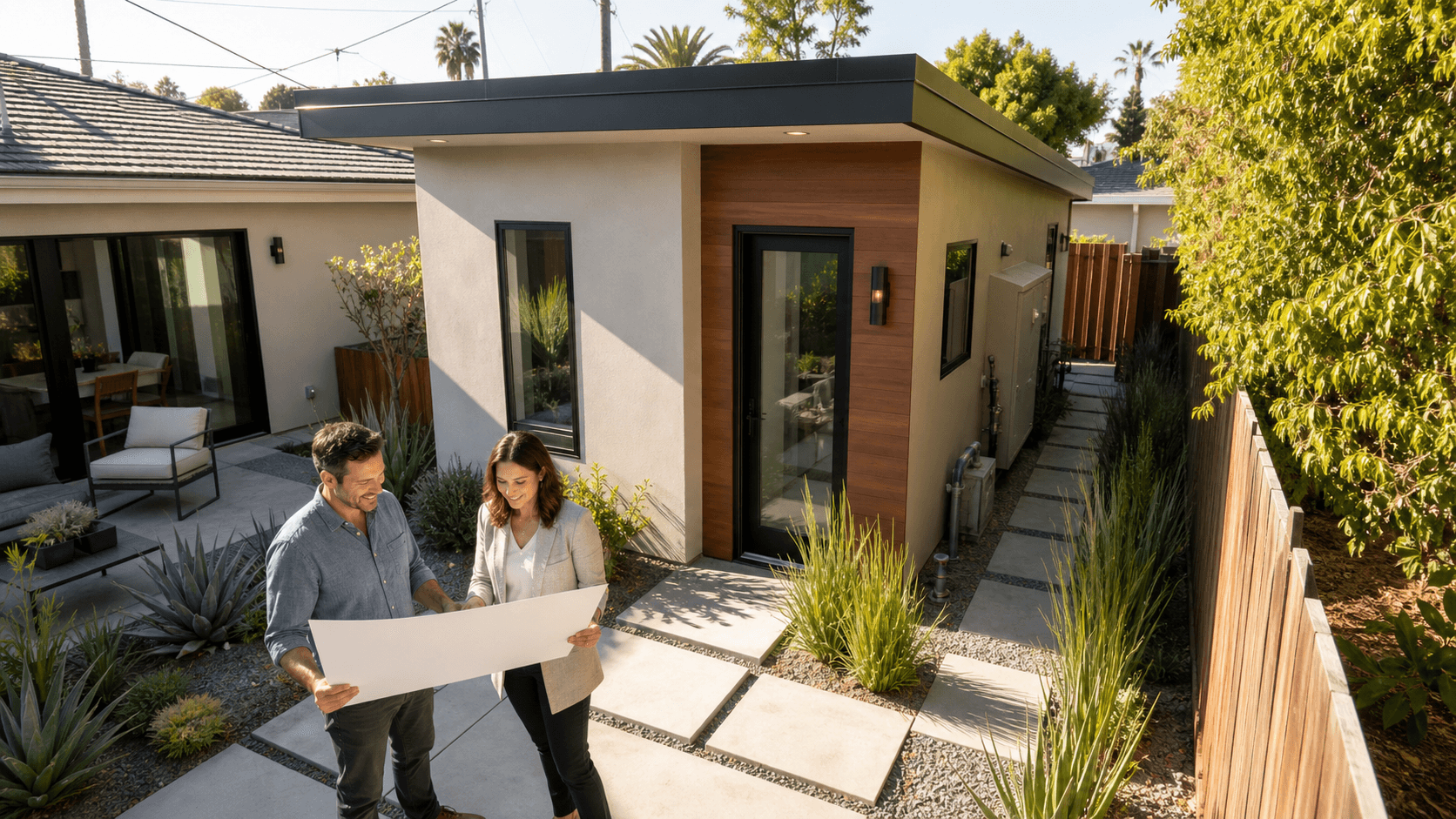
Many homeowners are surprised by what is allowed on a standard Los Angeles lot, and also by what is not. Zoning rules shape size, placement, and style. Lot size, side and rear setbacks, and height limits all affect whether your best move is a detached backyard ADU, an attached unit, or a garage conversion.
Some things that often matter to your options are:
- Where your existing house sits on the lot
- Whether you have a driveway or alley access
- If your current garage is front, side, or rear facing
- How steep or flat the yard is
California has opened a lot of doors for ADUs. State rules have relaxed some parking requirements, pushed for faster approvals, and given homeowners more rights to add a second unit. Still, Los Angeles adds its own local rules on top, so what works in one part of the state may not match what is allowed on your street.
Because of this mix of state and city rules, myths spread quickly. Common ones include:
- "Any size ADU is allowed in my backyard."
- "It is on my property, so I do not need permits."
- "I can skip plans and just convert the garage."
A good ADU contractor in Los Angeles will read your lot, check current rules, and suggest an option that keeps you safe, legal, and attractive to future buyers. Skipping that step can put you at risk for headaches later, especially when it is time to refinance or sell.
Budget Truths Every ADU Contractor in Los Angeles Knows
Online cost ranges for ADUs often sound simple and low. What they rarely include is everything it takes to get from a blank yard or old garage to a finished, rent ready home. Custom ADUs and garage conversions include design, permits, site work, utility changes, finishes, and often some surprise fixes to older structures.
Hidden or easy-to-miss costs can include:
- Upgrading electrical service for the extra load
- New sewer lines or tie-ins for the ADU
- Strengthening or replacing old garage slabs
- Code upgrades triggered when walls are opened
Financing is another area where starting early pays off. Many owners like $0 out-of-pocket options so they can keep savings in the bank while the project is built. Others lean on equity-based financing tied to their home, then use future rent to cover payments. A smart move is to look at your budget and potential lending options before deep design work. That way the scope, size, and finish level all match what you are truly comfortable carrying long term.
Design and Permitting Choices That Pay Off Later
Design is not just about making an ADU "cute." For renters and for your future resale, some layout choices pay you back for years. Separate entries help everyone feel privacy. Good soundproofing between units keeps daily life calm. Storage and in-unit laundry make the space feel like a real home, not an afterthought.
When we plan ADUs for Los Angeles, we also think about our local climate and long daylight hours. Smart choices include:
- Quality insulation even in a small space
- Window placement that reduces glare but keeps natural light
- Shading, overhangs, and a good AC system
- Roof design and drainage that move water away from buildings
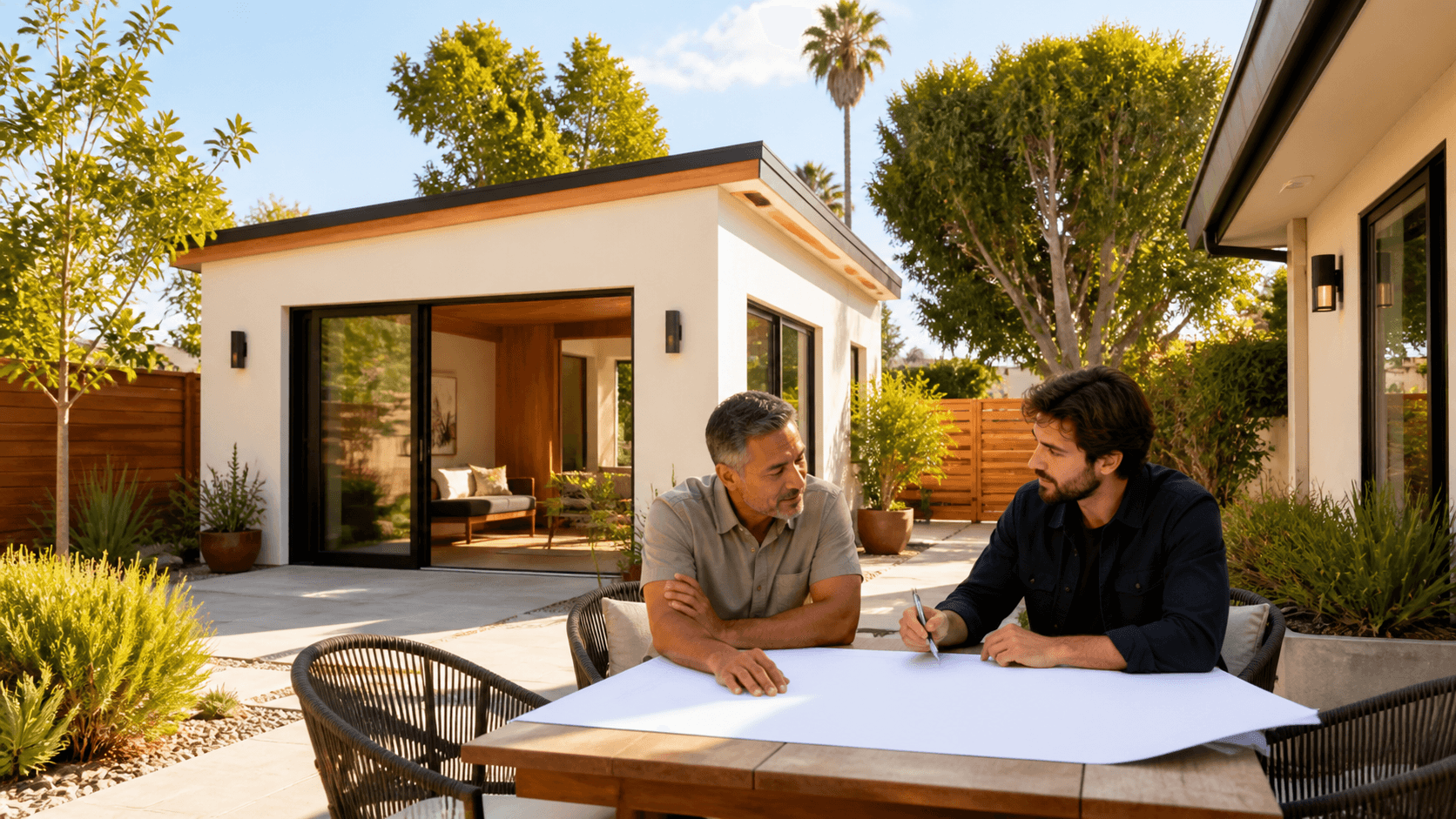
On the permitting side, clean, permit-ready plans can save months. If your ADU contractor in Los Angeles is involved early in design, they can shape plans that match what plan check staff expect to see. That reduces back-and-forth, redlines, and mid-project changes that cost time and money.
Construction Realities Your ADU Team Wishes You Accepted
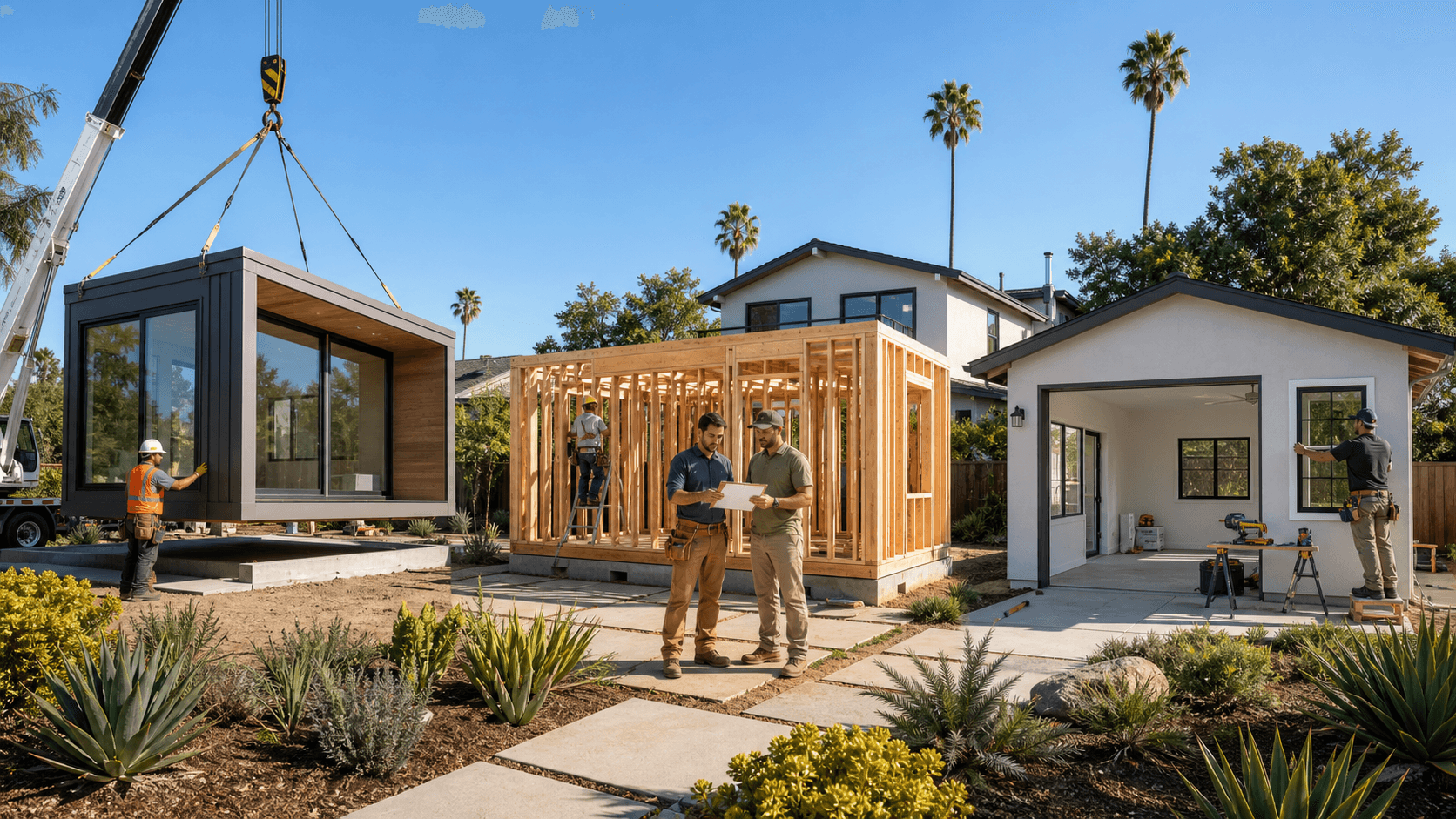
Once work starts, your property becomes a job site for a while, and that changes daily life. There will be noise, trucks, workers coming and going, and materials stored on your lot. Parking spots may be tighter for a bit. A clear plan for where crews park, where dumpsters sit, and which paths they use can reduce stress, especially if you have kids, pets, or close neighbors.
Even with strong planning, timelines can shift. Inspections may be booked out further than expected. Materials might be on backorder. Opened walls may reveal old wiring or unpermitted work that needs to be fixed. Sometimes a garage foundation is not as strong as it looked from the outside.
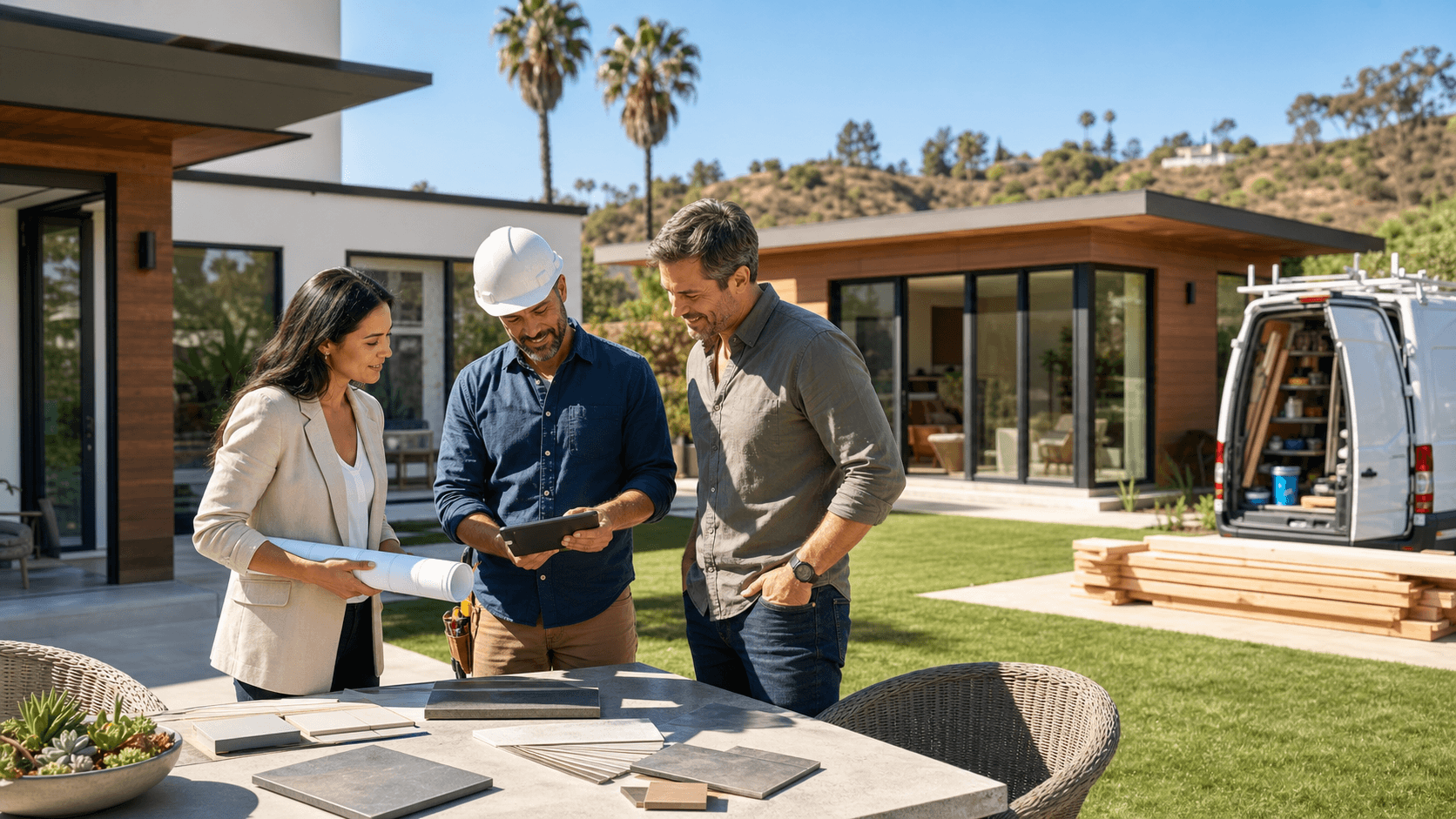
Having one accountable team handle design, permitting, and construction helps with all of this, because everyone is on the same page. There is no blame game between designer and builder, and changes can be handled in a more direct way. That kind of single-team approach usually leads to a smoother path from demo to move-in.
Rental Income, Tenants, and Long-Term Management
For many homeowners, the whole point of adding an ADU is steady rental income. To make that real, it helps to be honest about what your ADU can rent for. Neighborhood comps, unit size, privacy, parking, and the quality of your finishes all shape the rent you can charge. It is smart to run conservative numbers so you are happy if income comes in higher, not stressed if it comes in lower.
Good tenant placement is its own skill set. It includes:
- Careful screening and background checks
- Clear leases that match local rules
- Respectful house rules that protect your main home
- Strong move-in and move-out processes
Thinking like an investor means also planning for vacancy, repairs, and long-term maintenance. Your ADU is not just a nice backyard project, it is a small rental business on your land. When design, financing, construction, and tenant placement all support that bigger goal, your ADU has a better chance of being a calm, steady asset for years.
Get Started With Your Project Today
If you are ready to turn your ADU ideas into a functional space that adds real value to your property, our team at One Stop ADU Center is here to help. As an experienced ADU contractor in Los Angeles, we guide you through every step, from initial concept to completed construction. Reach out today so we can review your goals, assess your property, and outline clear next steps. Have questions or need a detailed quote? Simply contact us to get the process started.