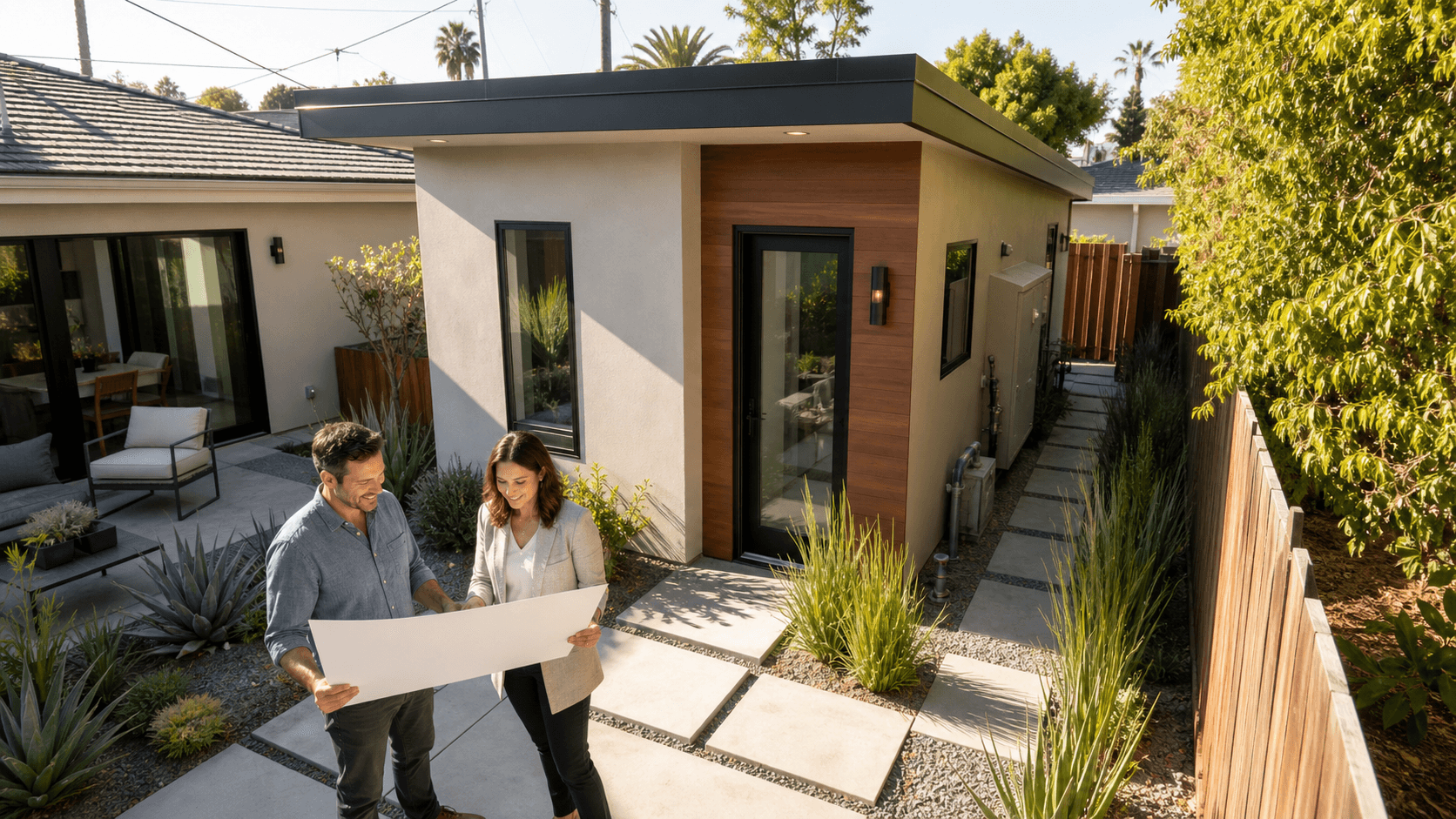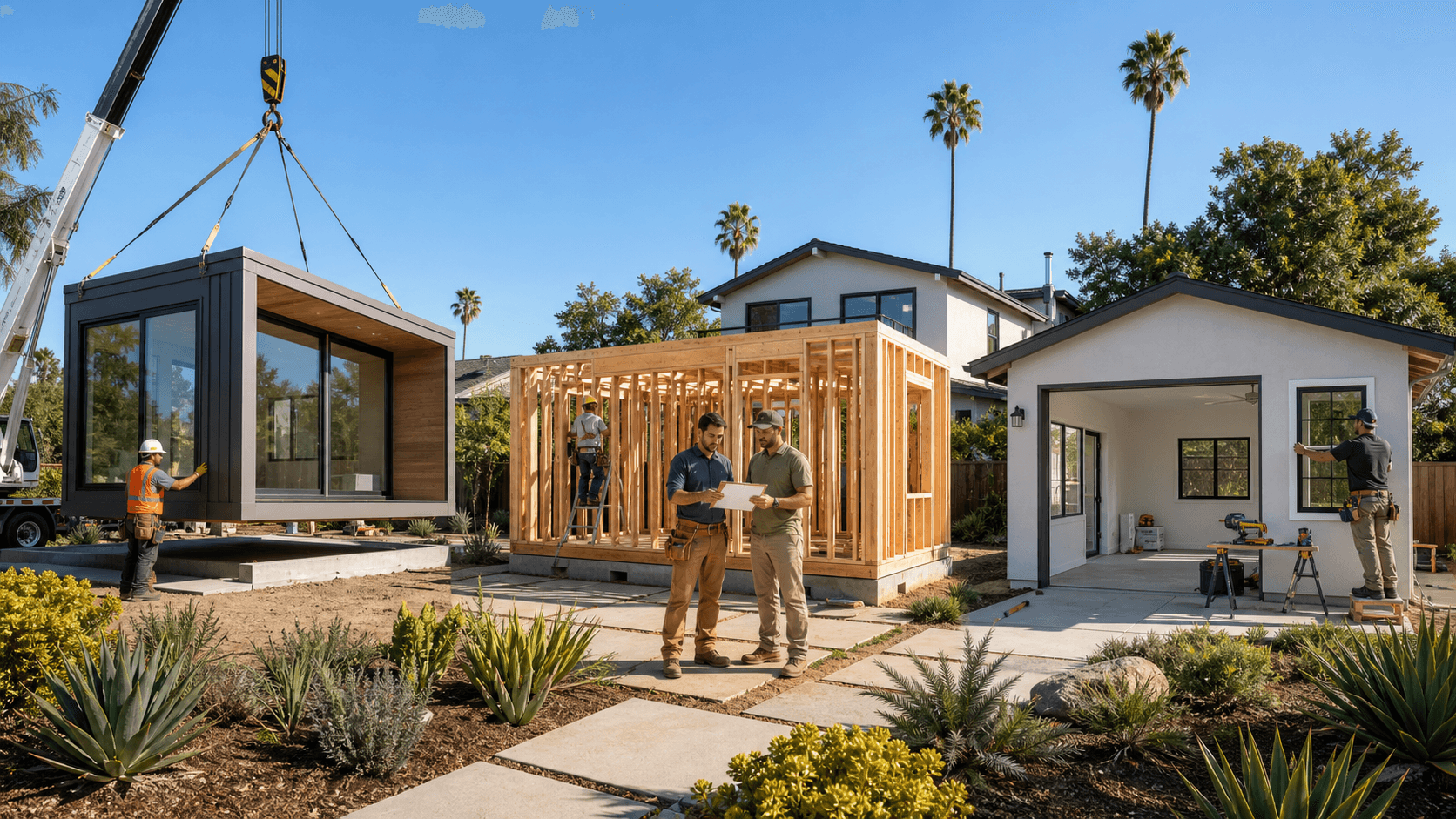

Make Your ADU Contract Work as Hard as Your Backyard
A strong ADU contract can save you a lot of stress, time, and surprise costs. If you are thinking about building an accessory dwelling unit in Los Angeles, the agreement you sign with your builder is just as important as the design and the finishes.
Summer is a popular season to kick off ADU projects. Permits are moving, people are planning for the rest of the year, and many homeowners want their units ready for fall or the holidays. Locking in a true turnkey ADU builder in Los Angeles before demand spikes can help you stay ahead, instead of getting stuck in a long line.
A good turnkey contract should clearly spell out four big areas: scope, allowances, change orders, and warranties. When these are clear, you are less likely to face surprise invoices, slowdowns, or finger-pointing. Our team at One Stop ADU Center works as a full-service firm, so we care a lot about how these agreements are written and how they protect homeowners.
We design, finance, permit, build, and lease ADUs for homeowners with no money out of pocket. Because we handle every phase in-house, we see what goes wrong when contracts are weak and what goes right when everything is spelled out under one coordinated agreement.
Defining a True Turnkey Scope of Work
The word "turnkey" gets thrown around a lot. In Los Angeles, a true turnkey ADU contract should mean this: by the time the project is done, you can walk into a finished, permitted unit that is ready for living or renting, without having to manage loose ends on your own.
A complete scope of work usually covers:
- Detailed architectural plans and engineering
- All city submittals, comments, and permit approvals
- Foundation, framing, roofing, and exterior siding or stucco
- Electrical, plumbing, and HVAC systems, including code requirements
Inside the ADU, the scope should list:
- Insulation and energy code compliance
- Drywall, doors, windows, trims, and paint
- Cabinets, countertops, plumbing fixtures, and light fixtures
- Flooring, tile, and any built-ins that are part of the design
You also want the site work spelled out. That includes utility connections, trenching, grading, and any concrete walkways, steps, or small retaining needs that are tied to the ADU. Final inspections and city sign-off should be included too, not left for you to figure out later.
Common problem areas are items that sit "between" trades or are hard to see at first, such as:
- How far utilities need to be trenched to reach the ADU
- Whether the main electrical panel needs an upgrade
- Soil conditions that might require a different type of foundation
- Repairs or changes to existing driveways, fences, or gates
A careful turnkey ADU builder in Los Angeles will address these up front as clearly as possible, instead of burying them in fine print or leaving them out.
Understanding Allowances So You Stay on Budget
Allowances are placeholder amounts in your contract for things that have not been fully picked yet, like cabinets, counters, tile, and appliances. They are not "extra money"; they are part of your contract total. The key is whether those allowances are realistic for the level of finish you expect.
If an allowance is vague or unrealistically low, you can run into trouble later. For example, if you want mid-grade cabinets and durable flooring, but the allowances only cover the most basic options, you may face a string of "upgrade" charges when it is time to choose materials.
Good allowances should:
- Be listed line by line, not lumped into one big number
- Match typical Los Angeles material and labor costs for the finish level you want
- Spell out what is included, such as soft-close hardware or standard backsplash height
- Note if items like appliances are included or excluded
Most homeowners like to personalize at least some finishes. At One Stop ADU Center, we use detailed specs and curated finish packages to keep that fun without letting the budget drift. When packages and price levels are clear from the start, you can choose knowing how it fits into the agreed number.
Managing Change Orders Without Losing Control
Even with a careful contract, things can change. That is where change orders come in. A change order is a written agreement to adjust the work, the price, or the schedule after the contract is signed.
Common reasons for change orders include:
- Homeowner design changes, such as adding a built-in or moving a wall
- Unforeseen site conditions, like a hidden utility line or buried concrete
- City plan corrections or new requirements after plan review
- Code-driven upgrades discovered during construction
A fair change order clause should explain:
- What counts as a change order and what does not
- How costs will be calculated and presented
- How schedule impacts will be handled
- When and how you approve or decline changes
You should see each change order in writing, with a clear description, price adjustment, and time adjustment, and you should sign before the work is done. That protects both you and the builder.
A turnkey ADU builder in Los Angeles can often keep change orders to a minimum by doing strong preconstruction work. This includes walking the site carefully, checking access, looking at existing utilities, and coordinating design and permitting under one roof so surprises are less likely.
What Your ADU Warranty Should Actually Cover
Once your ADU is built and occupied, the warranty kicks in. This is the part of the contract that explains how you are protected if something fails or does not perform the way it should.
There are usually a few layers:
- Workmanship warranty from the builder, covering how things were installed
- Manufacturer warranties on items like appliances, windows, or roofing materials
- Structural or roof guarantees that may last longer than general finishes
When you read the warranty section, pay attention to:
- Duration, which may be different for structure, systems, and finishes
- What is covered and what is excluded
- How to report an issue and what response times look like
- What actions could void coverage, such as unapproved repairs
It should be clear who you call when something pops up after move-in or tenant placement. Because One Stop ADU Center handles design, build, and leasing in one model, there is a single point of contact instead of leaving homeowners to chase multiple subcontractors or vendors.
Lock in a Solid ADU Contract and Start Earning Sooner
Before you sign anything, it helps to slow down and review your ADU contract with a simple checklist. Ask yourself:
- Is the scope of work detailed from permits to final inspection?
- Are allowances realistic for the finishes I actually want?
- Is the change order process clear, written, and fair?
- Do the warranties explain who covers what and for how long?
Getting these items clear early can speed up approvals, keep construction moving more smoothly through summer and into fall, and help you start using or renting your ADU sooner. When your contract is set up the right way, your backyard can become a long-term income-producing asset without constant stress or surprises, and that is the real goal of a turnkey build.
Get Started With Your Project Today
If you are ready to add flexible living space and long-term value to your property, our team at One Stop ADU Center is here to guide you from concept to completion. As a trusted turnkey ADU builder in Los Angeles, we handle design, permits, and construction so you can move forward with confidence. Share a few details about your goals, timeline, and budget, and we will outline clear next steps tailored to your property. Have questions or want to schedule a consultation? Simply contact us to get started.