Keep Your ADU Cool, Comfortable, and Profitable
A rental-performing ADU in California has to do more than just look cute in the backyard. It has to stay cool, feel comfortable, and keep tenants happy through long, hot stretches. When a small unit overheats, people sleep badly, complain often, and start thinking about moving out as soon as the lease is up.
Many backyard ADUs are built with the same basic specs as a main house, but that does not work well. Small, dense spaces gain heat fast, cool down fast, and need their own HVAC sizing, insulation approach, and window choices. In this article, we walk through how to think about cooling and comfort, from HVAC and insulation to shading and window specs, and how to judge backyard house builders on real thermal performance, not just pretty floor plans.
Why Thermal Comfort Makes or Breaks ADU Rental Returns
Comfort is not a luxury for a rental ADU. It is part of the product you are offering. When a unit stays cool, quiet, and consistent, you can ask for stronger rent, attract better qualified tenants, and keep them longer. People are more willing to stay put when they feel good in the space.
Thermal comfort also ties directly to energy use and utility bills. Systems that are too small run nonstop and still can't catch up. Systems that are too big turn on and off all the time, which wastes power and feels clammy, not crisp. Both situations mean:
- Higher monthly utility bills for tenants
- More "my AC isn't working" texts and calls
- Negative reviews about comfort and noise
- Extra wear on equipment and more service visits
Good thermal design also lines up with California energy standards. When you pay attention to insulation, windows, HVAC efficiency, and shading, you are not just checking a code box. You are building an ADU that is ready for hotter summers in the future and more appealing to renters and appraisers who care about comfort features.
Smart HVAC Sizing and System Choices for Small ADUs
Many people think "bigger AC, better comfort." In a small ADU, that idea backfires. An oversized HVAC system cools the air too quickly, shuts off, then starts again a short time later. This short cycling wastes energy, creates uneven temperatures, and can leave the space sticky because the system does not run long enough to pull out humidity.
For most rental ADUs, we see three main HVAC options:
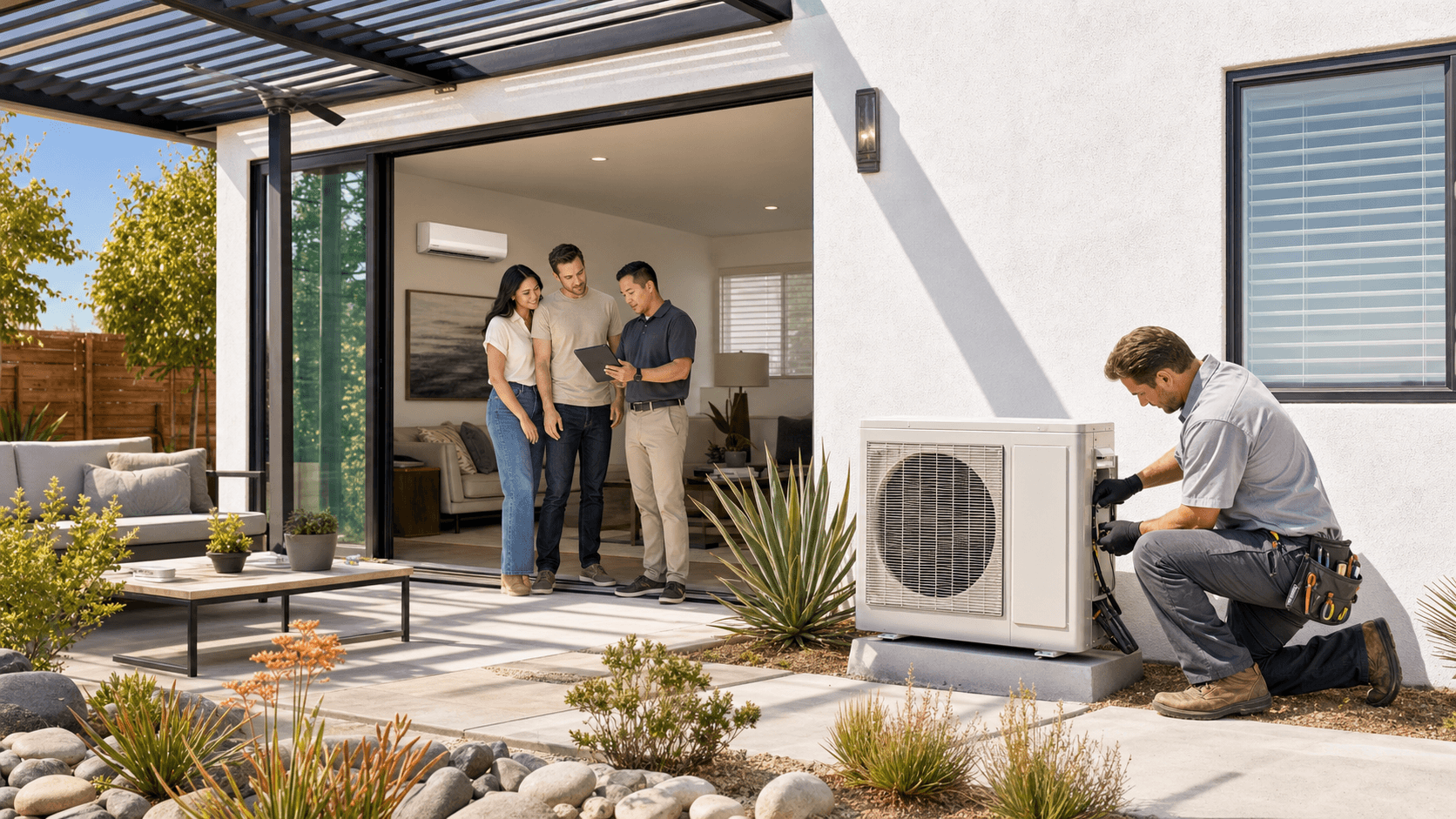
- Ductless mini-splits: Great for open layouts, quiet, efficient, and easy to zone by room
- Compact ducted systems: Good when you want hidden equipment and consistent airflow across several rooms
- Heat pumps with zoning: Helpful for larger ADUs or when you want separate control for bedroom and living areas
What you want from any backyard house builder is a clear HVAC design, not a guess. Ask for:
- Load calculations, often called Manual J or similar
- Equipment efficiency ratings, like SEER and HSPF where relevant
- Planned locations of condensers and air handlers, so noise does not end up right by a bedroom window or neighbor's patio
- Thermostat zoning where it makes sense, so tenants can adjust comfort by area
Right-sized HVAC means fewer complaints, better comfort, and less wasted power across the life of the ADU.
Beating the Heat with Insulation, Air Sealing, and Windows
Insulation is one of the quiet heroes of ADU performance. Code minimums are just that, the minimum. For a small space in a hot-summer area, going above the bare minimum often pays back through lower cooling loads and a more stable indoor temperature.
Key areas to focus on:
- Roof and ceiling: Priority number one in strong sun
- Exterior walls: Good R-values plus careful installation
- Floor or raised platform: Stops hot air from building up under the unit
Insulation alone is not enough if the ADU is leaky. Air sealing blocks hot outdoor air from sneaking in through gaps around pipes, wires, windows, doors, and recessed lights. In a small unit, a few leaks can quickly swing the temperature and strain the AC. We like to see:
- Sealing at all visible penetrations
- Attention around window and door frames
- Air sealing details in plans, not just "by feel"
Windows are another big part of the story. For rentals, you want glass that keeps heat out, light in, and noise down. Specs that matter include:
- Solar Heat Gain Coefficient (SHGC): Lower lets in less heat from the sun
- U-factor: Lower means better insulation value of the glass and frame
- Double glazing: Standard choice that usually balances cost and comfort well
Direction matters too. On west and east walls, where the sun can be harsh, we like lower SHGC glass, fewer large windows if possible, and strong shading. On south-facing sides, some controlled sun can be nice, as long as overhangs or shades block the worst angles.
Shading, Orientation, and Practical Heat-Blocking Upgrades
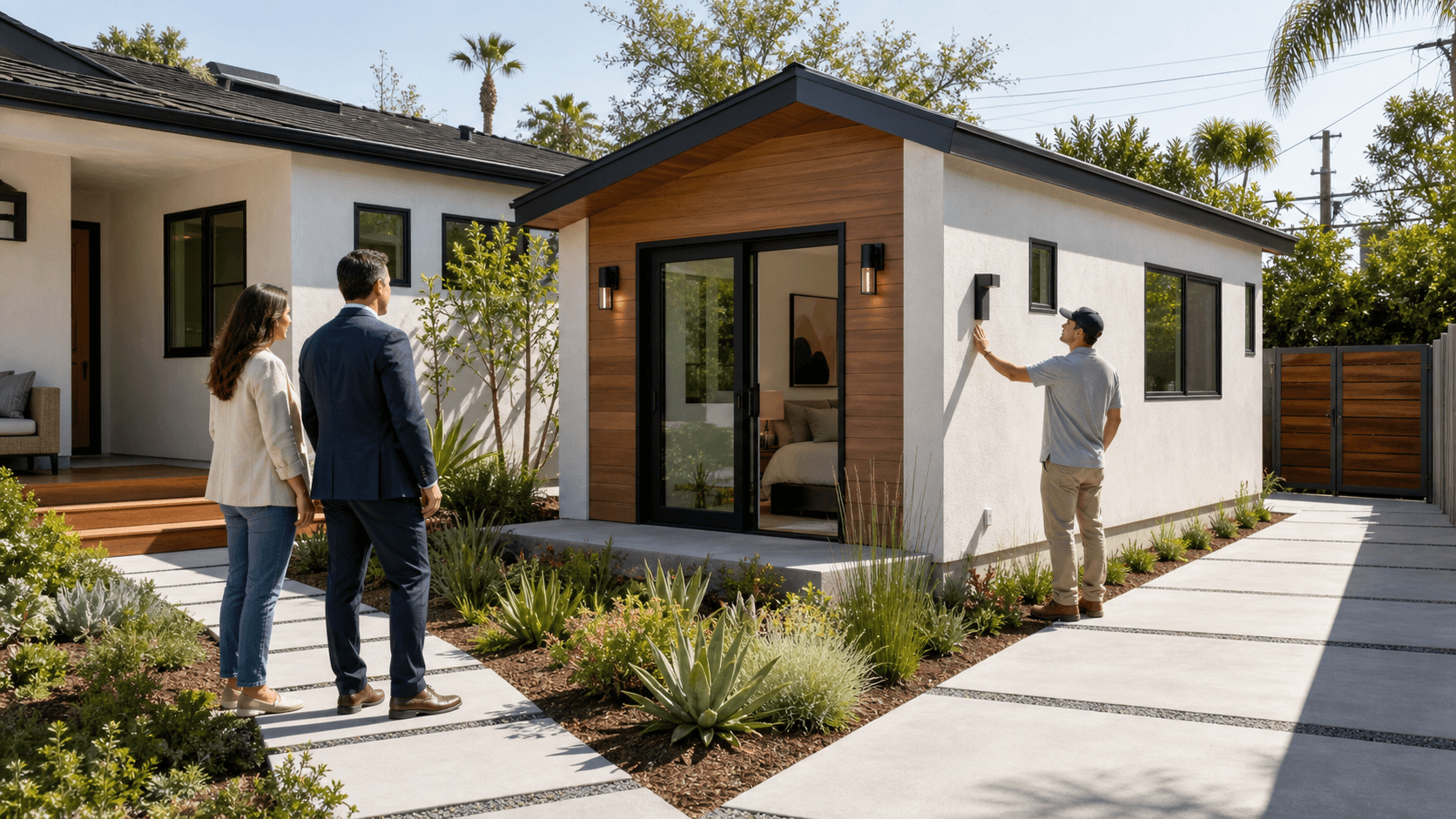
How and where an ADU sits in the yard has a big effect on cooling needs. Even small shifts in orientation can help. Placing the broadest wall away from direct afternoon sun, tucking windows behind existing trees or fences, and avoiding big west-facing glass can all reduce heat gain before you ever turn on the AC.
Practical shading ideas that work well for rentals include:
- Roof overhangs that block high summer sun but still allow light
- Awnings or exterior shades over the hottest windows
- Pergolas or trellises near patios or sliding doors
- Trees and tall plants that cast shade without feeling dark
Inside, renters usually care about comfort plus looks. Helpful interior touches include:
- Ceiling fans in living and sleeping areas
- Light-colored roofing and exterior finishes that reflect sunlight
- Quality blinds or shades that give both privacy and heat control
These upgrades cut peak afternoon heat and make the ADU feel calmer and more livable.
Utility-Bill Impact, ROI, and Choosing the Right Builder
All of this adds up to real utility-bill impact. When an ADU has smart HVAC sizing, good insulation and air sealing, high-performance windows, and thoughtful shading, the AC does not have to fight the heat as hard. That means lower run times, fewer service calls, and a space that feels cool without tenants cranking the thermostat down all day.
Lower bills usually lead to:
- Less bill shock for tenants
- Fewer comfort complaints and "fix my AC" requests
- Happier reviews for your rental
- More lease renewals and fewer gaps between tenants
If you are deciding which backyard house builders to trust, thermal performance should be on your checklist, not an afterthought. Ask each builder:
- How do you size HVAC systems for ADUs, and do you provide written load calculations?
- What insulation levels do you include in walls, roof, and floor, and are they above code minimums?
- How do you handle air sealing, and do you specify any performance testing?
- What window SHGC and U-factor ranges do you typically install in hot-summer areas?
Compare written proposals, not just conversations:
- Clear HVAC system specs and efficiency ratings
- Listed insulation R-values by assembly
- Window schedules that include SHGC and U-factor
- Any commitment to duct leakage or air sealing quality
At One Stop ADU Center, we handle design, financing, permitting, building, and leasing under one roof. That means we can line up your ADU's thermal performance with your long-term rental goals, so the unit stays cool, comfortable, and profitable through many hot seasons to come.
Get Started With Your Project Today
If you are ready to turn your underused yard into a functional living space, our team at One Stop ADU Center is here to guide you through every step. Explore how our backyard house builders can help you plan, design, and build an ADU that fits your goals and budget. We handle the details so you can focus on how you want to use your new space. Have questions or want to talk through ideas with a specialist, simply contact us to schedule a conversation.