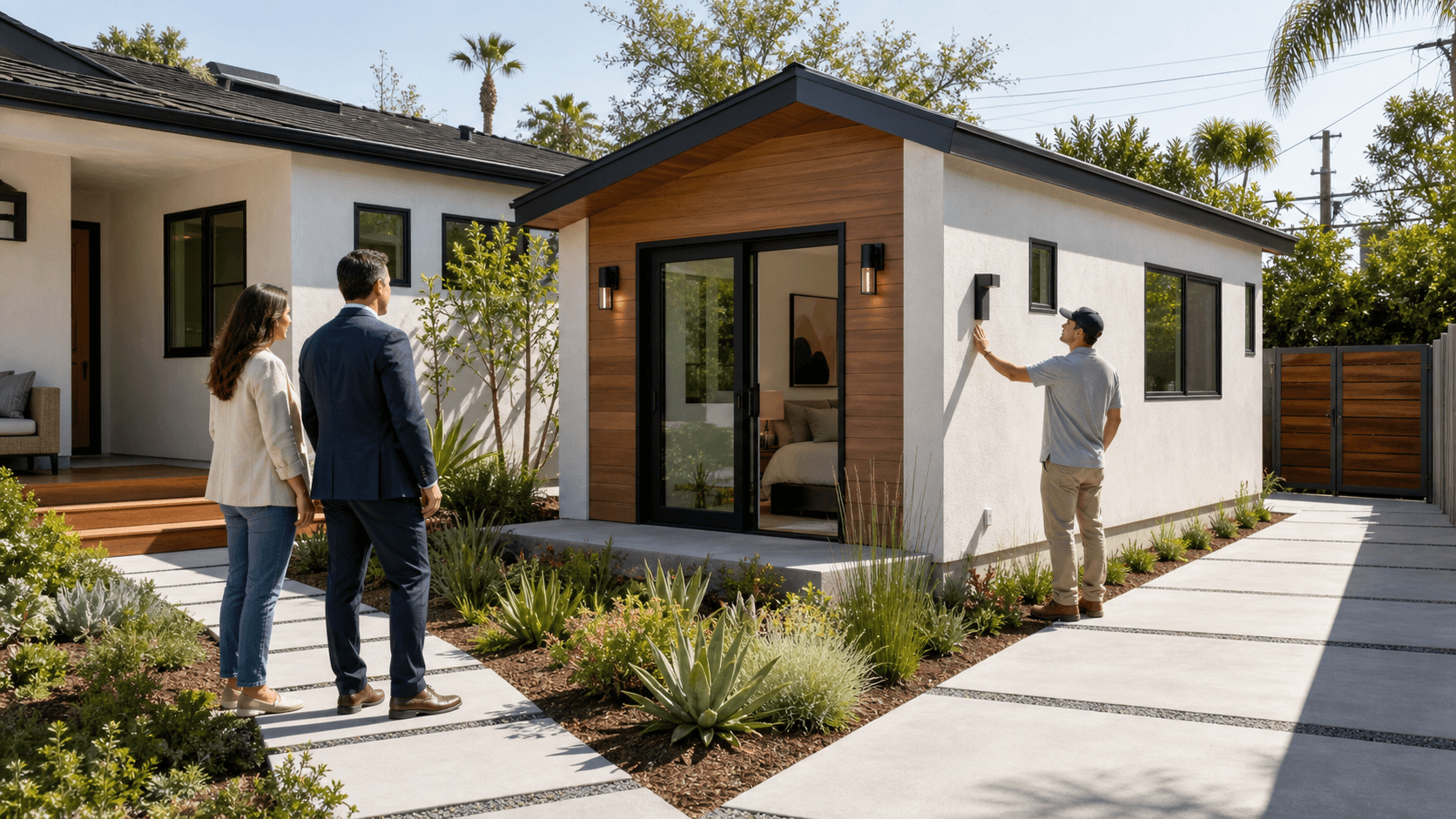

Turn Your Orange County Garage Into Passive Income
Turning a garage into a rental unit is one practical way to add income potential to an Orange County home. Rental demand is strong, state laws are generally supportive of accessory dwelling units (ADUs), and there is limited unused housing stock. A garage conversion in Orange County can help you respond to that demand using space you already own.
Converting an existing garage is often a relatively direct path to creating an ADU. Because the structure already exists, design can move faster, city review may be more focused, and construction can involve fewer unknowns than starting from the ground up. Once the ADU is permitted and built, it can begin contributing through rent and potential future resale value.
Before committing to a project, most homeowners want clear information. Common questions include: What is a realistic monthly rent range? What will the process look like with the city and, if applicable, an HOA? Should the unit be used as a long‑term or mid‑term rental to align with family needs and risk tolerance? The sections below outline those considerations step by step.
ROI Basics for a Garage Conversion in Orange County
When evaluating return on investment (ROI) from a garage conversion in Orange County, it is important to look beyond headline rent numbers. A more complete view starts with understanding project costs and timelines, then aligning those with realistic local rental comparisons.
Typical cost categories for a garage ADU include:
- Design and architectural plans
- City application and permit review fees
- Any impact fees that may apply based on size and city rules
- Construction and finishes
- Utility work such as electrical, plumbing, and any necessary sewer upgrades
- Financing costs if a loan or line of credit is used
To get a basic sense of ROI, many owners look at a simple payback approach. They consider the total project cost and compare it to expected monthly rent after accounting for expenses such as property tax changes, insurance differences, and ongoing maintenance. If projected rent from the ADU covers these costs and still provides positive cash flow, that is an encouraging early indicator. This is not a substitute for professional financial or tax advice, which should be sought for decisions about specific situations.
For example, if a garage conversion can support rent levels similar to other ADUs in the neighborhood and sustained occupancy is realistic, it becomes possible to estimate how many years it might take for rent to offset the initial investment. After that point, additional rent represents long‑term income, while the property may also benefit from added value.
There is also a resale dimension. A legal, well‑designed ADU often makes a home more appealing to future buyers, particularly in higher‑cost cities such as Irvine, Costa Mesa, and Huntington Beach. Many buyers appreciate the option of extra income or a flexible suite for family members, which can help a property stand out in a competitive market.
Permits, City Rules, and HOA Constraints
California has adopted a generally supportive legal framework for ADUs, including garage conversions. That statewide support is helpful, but each Orange County city still manages its own application procedures, timelines, and design expectations. Anaheim, Santa Ana, Mission Viejo, and other cities follow the same broad state rules, but the experience on the ground can differ.
Key local factors that shape a garage conversion plan include:
- Parking replacement rules if existing covered spaces are removed
- Fire and life safety standards, including smoke alarms, egress requirements, and possible sprinkler needs
- Setbacks and height limits if exterior changes affect the building footprint
- Requirements for a separate entry and clear address or unit designation
- Any remaining owner‑occupancy rules where they still apply
Many Orange County homeowners also live in communities governed by homeowners' associations (HOAs). City approval and HOA approval are separate processes, and both are typically required. State law limits the extent to which HOAs may restrict ADUs, but they can often require reasonable design controls to maintain a consistent neighborhood appearance.
Common HOA considerations for garage conversions include:
- Exterior appearance, colors, and materials
- How many vehicles may park in driveways or on the street
- Expectations around noise and privacy for nearby neighbors
- Guest policies and use of common areas
- Limits on short‑term rentals under 30 days
Projects tend to progress more smoothly when they begin with clear plans, site checks, and early communication. Having qualified professionals handle drawings, code review, and coordination with city staff can reduce back‑and‑forth. HOAs also tend to respond better to complete, well‑documented proposals than to informal concepts.
Long‑Term vs. Mid‑Term Rental Strategies
Once a garage conversion in Orange County is feasible, the next major decision is how the ADU will be rented. In many areas, short‑term nightly stays are restricted or prohibited by cities and HOAs, so owners frequently choose between long‑term and mid‑term rental approaches.
Long‑term rentals are leases of 12 months or more. They typically offer:
- Relatively stable income with fewer move‑ins and move‑outs
- Less time spent on marketing and screening over the course of a year
- Simpler furnishing needs, since many tenants provide their own furniture
Mid‑term rentals are stays of about 30 to 90 days or more and are often used by travel nurses, corporate guests, or households between homes. They tend to involve:
- Potentially higher effective monthly rent
- More flexibility to reclaim the space periodically for family use
- A need for full furnishings, utilities setup, and more active management
From a workload standpoint, long‑term rentals generally feel more hands‑off once a responsible tenant is in place. Mid‑term rentals can offer a middle ground in locations where nightly stays are heavily regulated but additional income and occasional personal use are still priorities. Before selecting a strategy, it is important to review:
- City rules on minimum stay length and any required business licenses
- HOA rules regarding guests, parking, and minimum lease terms
- Insurance requirements and any lender conditions related to rentals
A clear rental plan also helps guide design decisions. Long‑term renters may prioritize storage and in‑unit laundry, while mid‑term guests may place more value on flexible workspace and turnkey furnishings.
Designing Your Garage ADU for Seasonal Demand
Orange County rental demand is active throughout the year, but it can shift by season. Summer often brings additional interest from interns, families changing school districts, and individuals starting new jobs. Hospitals, universities, and major employers help sustain demand during the rest of the year.
A garage ADU can be planned with these patterns in mind by focusing on features that renters commonly value in a warm, sunny climate:
- Effective air conditioning and ceiling fans for comfort
- Thoughtful window placement to maximize daylight while limiting heat gain
- Shaded outdoor space, such as a small patio or seating area
- Privacy fencing or landscaping between the main house and ADU
- Good soundproofing between shared walls and ceilings
Layout flexibility is also important. A compact unit that can function as either a one‑bedroom or a studio‑style space makes it easier to shift rental strategies over time. For instance, the design might include:
- A private entry that does not interfere with daily routines in the main home
- A nook that can serve as a home office or as extra storage
- Space for a compact washer and dryer to appeal to both long‑term and mid‑term occupants
As needs change, the ADU can transition from housing a parent or adult child to serving a long‑term renter or a mid‑term guest, without major redesign. That versatility can help protect ROI if city regulations, HOA policies, or household priorities evolve.
Planning a High‑ROI Garage Conversion in Orange County
Before starting a conversion, it is helpful to define the primary objective. Is the focus on monthly cash flow, creating space for family, or supporting future resale value? The answer will influence how the unit is designed, how HOA approvals are approached, and which rental model is most appropriate.
From there, a professional feasibility review is a prudent next step. This typically includes a site walk to confirm what is realistic, a review of HOA documents if applicable, rental comparisons for both long‑term and mid‑term stays, and a clear path for obtaining permits in the specific city.
With that information in place, a garage can move from underused storage to a planned ADU that is aligned with local regulations and with the owner's financial and lifestyle goals. As with any significant property decision, owners should consult qualified legal, tax, and real estate professionals for advice tailored to their circumstances.
Maximize Your Property Value With a Smart ADU Conversion
Ready to turn unused space into a comfortable, income-generating living area? Our team at One Stop ADU Center can guide you through every step of your garage conversion in Orange County, from initial concept to final inspection. Tell us about your goals and budget, and we will create a tailored plan that fits your property and timeline. If you are prepared to move forward or have questions, simply contact us to schedule a consultation.